( 1 ) What were your first Impressions of the project?
When I first received the bundle of files from Aleksandra Jovanić, my first reaction was absolute awe when seeing her piece. I hadn't seen any work from the series prior to hers, thus had no idea what to expect (and was a bit anxious to be honest). The colors, the details, and how polished the output was definitely raised the bar. I immediately put the files to the test to see whether I could execute the code. It was a fully functional long-form program, of which I had the opportunity to try many seeds and watch how it behaved.
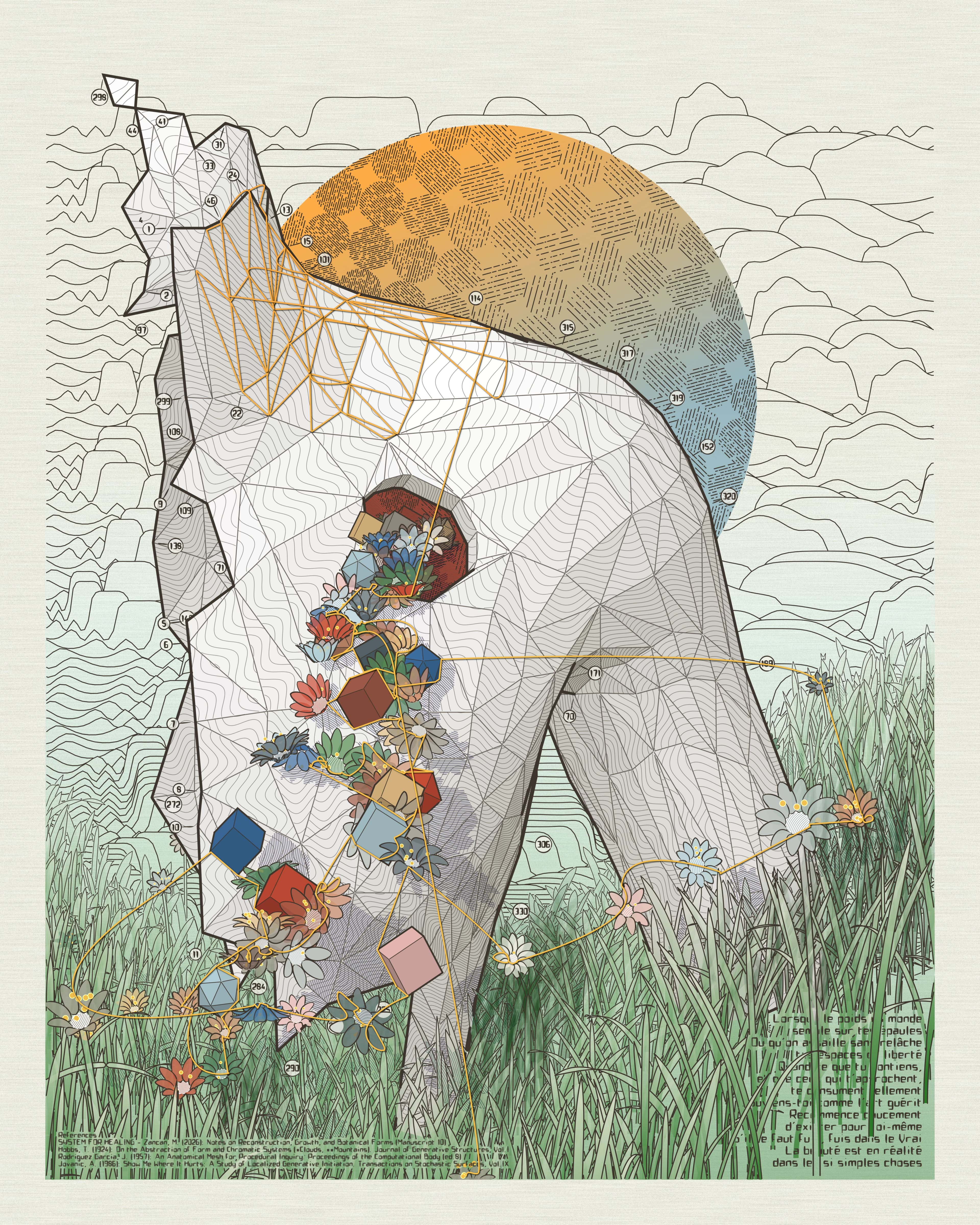
There was a wide range of possibilities crafted into the code that made me wonder why that specific output made it to the final selection, and I had a theory. I could see a little human figure, with a big foot and a crooked back. It displaced the visual from pure abstraction in the direction of figuration, which is a cursor that I love to play with myself.
( 2 ) What surprised you?
Something I expected to catch me off guard was that it was a P5.js project. Having never worked with P5, my eye wasn't trained to know what functions were part of the library and which were specific to the sketch. Thankfully, Aleksandra had left various comments for me to understand the code. I thought that was very kind and considerate. Thanks to the notes, I could easily grasp the architecture and the various blocks at stake. I was curious how important the 3D model was and how it was used.
( 3 ) What was your creative process?
After that initial discovery, I let it sit for a night, but honestly the concept in Aleksandra's piece was so inspiring that I knew exactly what part would serve as a foundation to my work.
On a more personal point of view, the first week of my assignment, I had custody of my kids; besides, it was school holidays. I've learned to cope with this constraint; in practice, it doesn't leave me much opportunity to code during the day, but it gives me plenty of space to think and to plan. When night comes, I know exactly how I'm going to make use of my nightly hours behind the computer.
The first thing I did was make a copy of Aleksandra's sketch, which I fed with the same hash as her final piece, and displayed the model's object in it. That literally copied and pasted Aleksandra's composition, except that my intent was to reveal the 3D shape underneath, rather than abstract it away. Once you have your composition settled and your concept clear, everything else follows very organically.
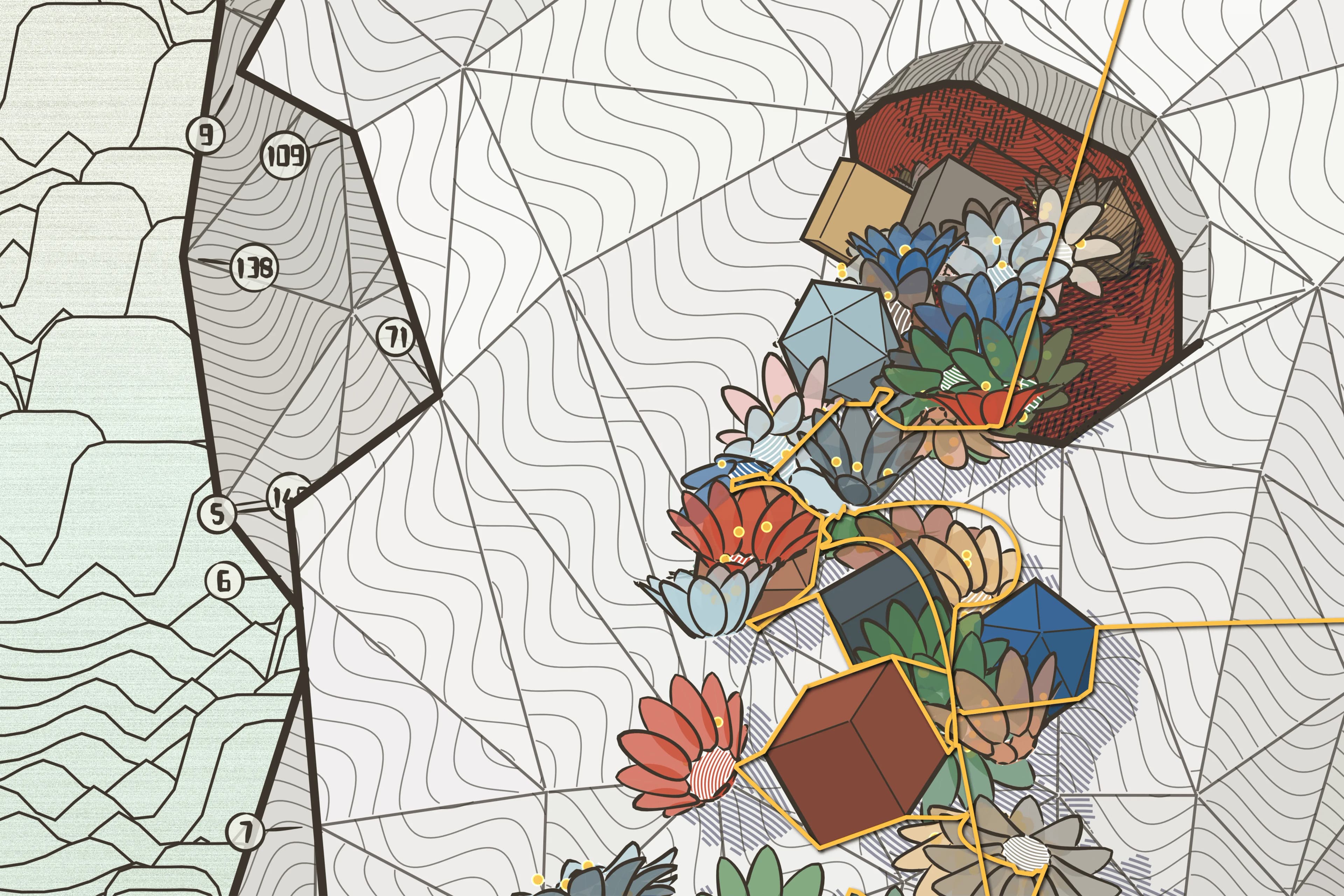
The framework I use is the same one I started to develop 5 years ago. It now contains a large variety of algorithms, each exposing a number of parameters that make it convenient to combine and experiment with. It's like a big toolbox, like a Photoshop for generative art, except I made the tools and I can upgrade, customize or hack the software as the creation process goes. For instance, I have a good class for handling 3D meshes, but here I had to code the parts that cuts a hole in it. Working with 3D maths and vectors is a particularly challenging activity that I enjoy.
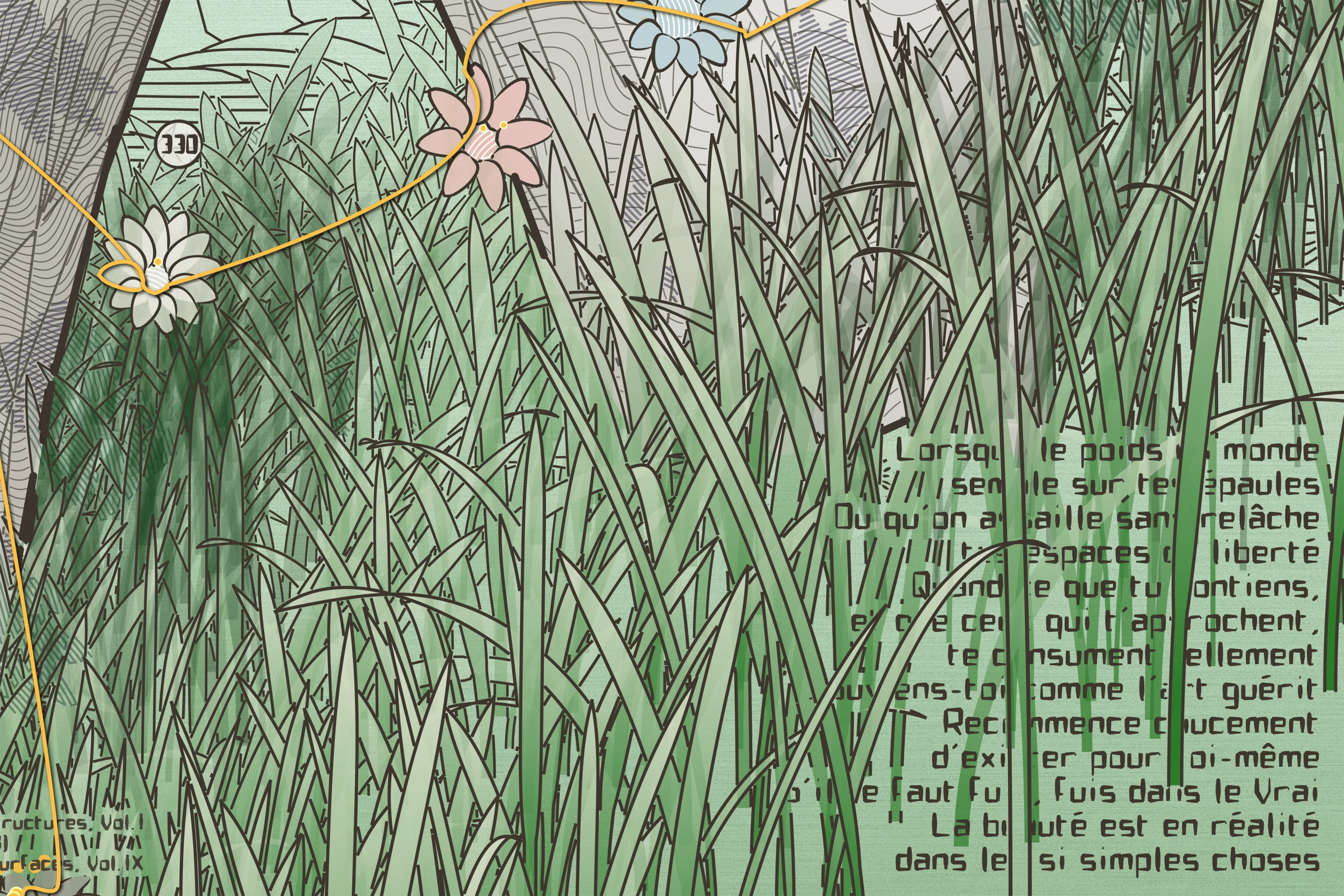
I also added my usual single-line on top of the drawing, a dynamic, organic thread that I use to connect various graphical elements together, and guide the viewer's eye on a path that invites a different reading of the piece. Fun fact: every character of that font was designed by typing numbers from my head in JavaScript. It's fully coded, nothing hand drawn.
( 4 ) What did you change and why?
I can't think of a moment when things transformed radically. My goal was pretty clear from the start. But by observing the piece, spending time with it, its concept became deeper and stronger. When I first integrated the fonts, before drawing the vertices indexes like you can see in the final piece, I only had a block of text randomly placed on the sheet. That night I was getting sleepy, and before calling it a day, I wrote some lines in French. That was for testing, not intended to stay, so that was very spontaneous and free. That text stayed for a number of iterations; it wasn't designed to make it to the final work, but it had somehow grown on me. I decided to keep it half-hidden in the grass, like a secret meaning beneath the work.
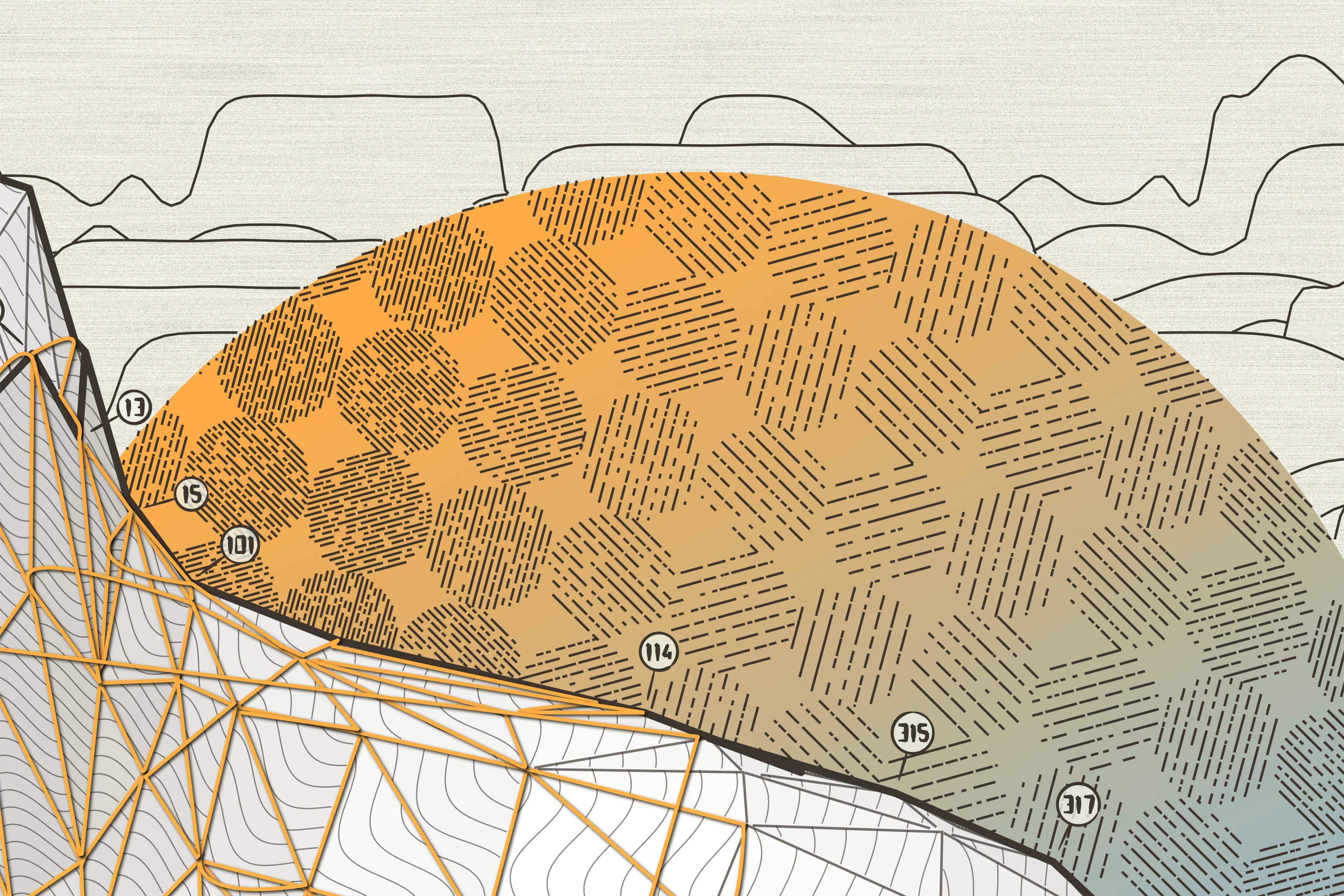
Maybe the biggest transformation was when I changed the colors of the sun/moon/planet to Aleksandra's palette, instead of the brick red that had been there all along. Both my daughters noticed that and approved, which gave me a rather strong validation.
Overall, I think I really progressed the way I was painting back in the days, by observing a lot, noticing details that could benefit from some fixing, and doing the actual fix -- even when that meant hours of coding for something no one would notice. Eventually, I believe that shows, but most importantly, I know that I couldn't do any better. When is the moment when you declare a piece finished? I suppose every artist faces that critical question at some point.
( 5 ) What did you keep and why?
That seed number that points out a location on the body and says, 'this is where it hurts,' felt very strong and empathetic, a direct connection between the algorithm and the human, and that's what I really wanted to keep. What struck me before I even started to look at the code was that an external asset was there, an .OBJ file for a low-poly model of a man, inherited from the previous project by Juan Rodíguez García. I implemented a hack to extract the part of the 3D model centered around the vertex, mainly to create a compact javascript object that I would be using later in my code, and avoid depending on an external asset.
Near the end of the creation process, I thought a good addition would be to add some marks and texts to resemble an old-fashioned technical sheet, to echo Aleksandra's style. It was particularly relevant here to recall her ribbon that connects the model's vertices together, as the way my line works is very similar to what I understood of her algorithm: brute force sorting, curve smoothing and sampling.
From Tyler's piece, which I only had a PNG of, I borrowed the color palette and reused a script I had made years ago, called ‘Cloud Background,' which was very evocative of his colorful mountains.
( 6 ) Anything Else?
I must say it’s been an absolute joy to work on that project. The concept of Please Respond was truly refreshing. It allowed a lot of freedom, with constraints flexible enough to remove pressure and enable creativity. I really like the concept of artist collaborations in general, but they can be tough; you usually have to find a middle ground. Please Respond was like a collaboration but exempt from ego-collision issues. I felt very lucky to inherit Aleksandra’s project, and I felt the urge to write to her and thank her for such an inspiring work. I literally had zero hesitation or friction with my creative process.
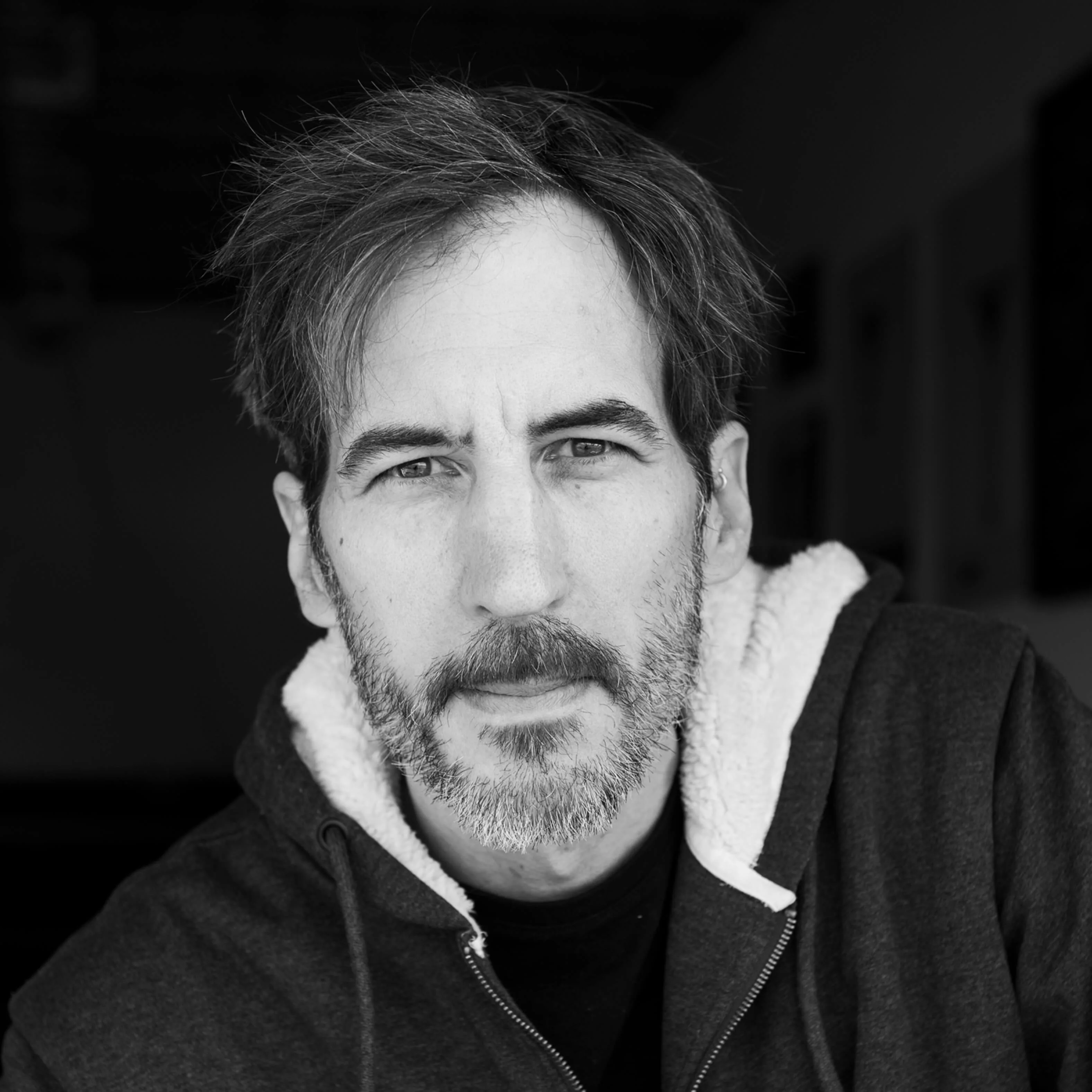
Zancan is a French artist working with code and pens. He began writing programs to create animated computer graphics in the late 1980s and have remained devoted to algorithmic image-making ever since. In parallel, he spent many years painting in oils, focusing on the human figure and lush natural environments.
Today, his practice is fully generative. Nature remains his primary subject: plants, branches, and leaves become algorithmic brushstrokes in dense compositions that explore the relationship between humans and the living world. He designs his own algorithms and tools, treating programming as a craft. The beauty of code matters to him as much as the images it produces.