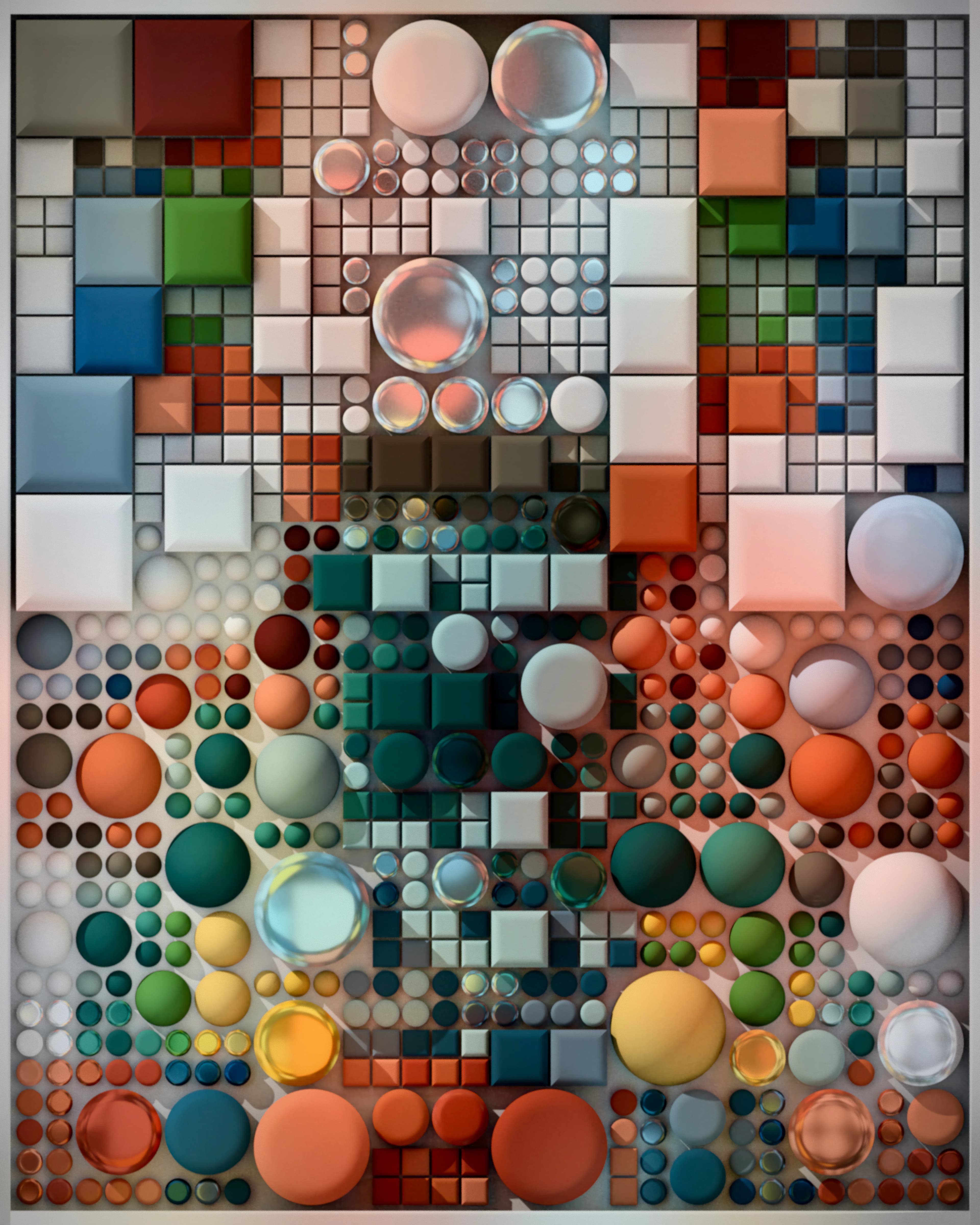
( 1 ) What were your first Impressions of the project?
I was excited! It sounded playful, almost like a school project. In some ways, it reminded me of why I got interested in generative/interactive art in the first place, exploring GitHub as a student and forking various projects and styles in order to learn.
( 2 ) What surprised you?
The insanely elegant and well-organized Mathias' code/project setup. It felt like a foreign land!
( 3 ) What was your creative process?
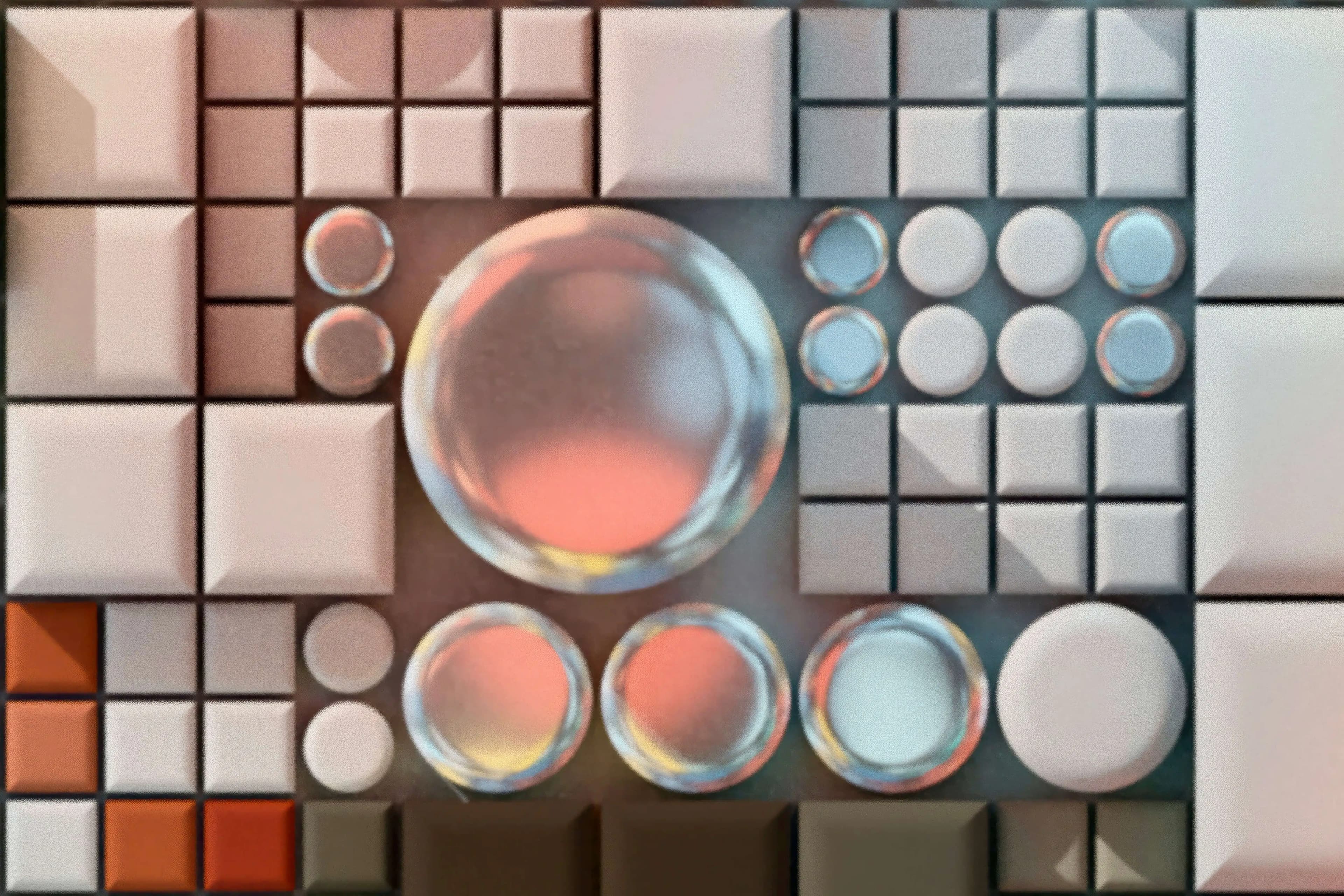
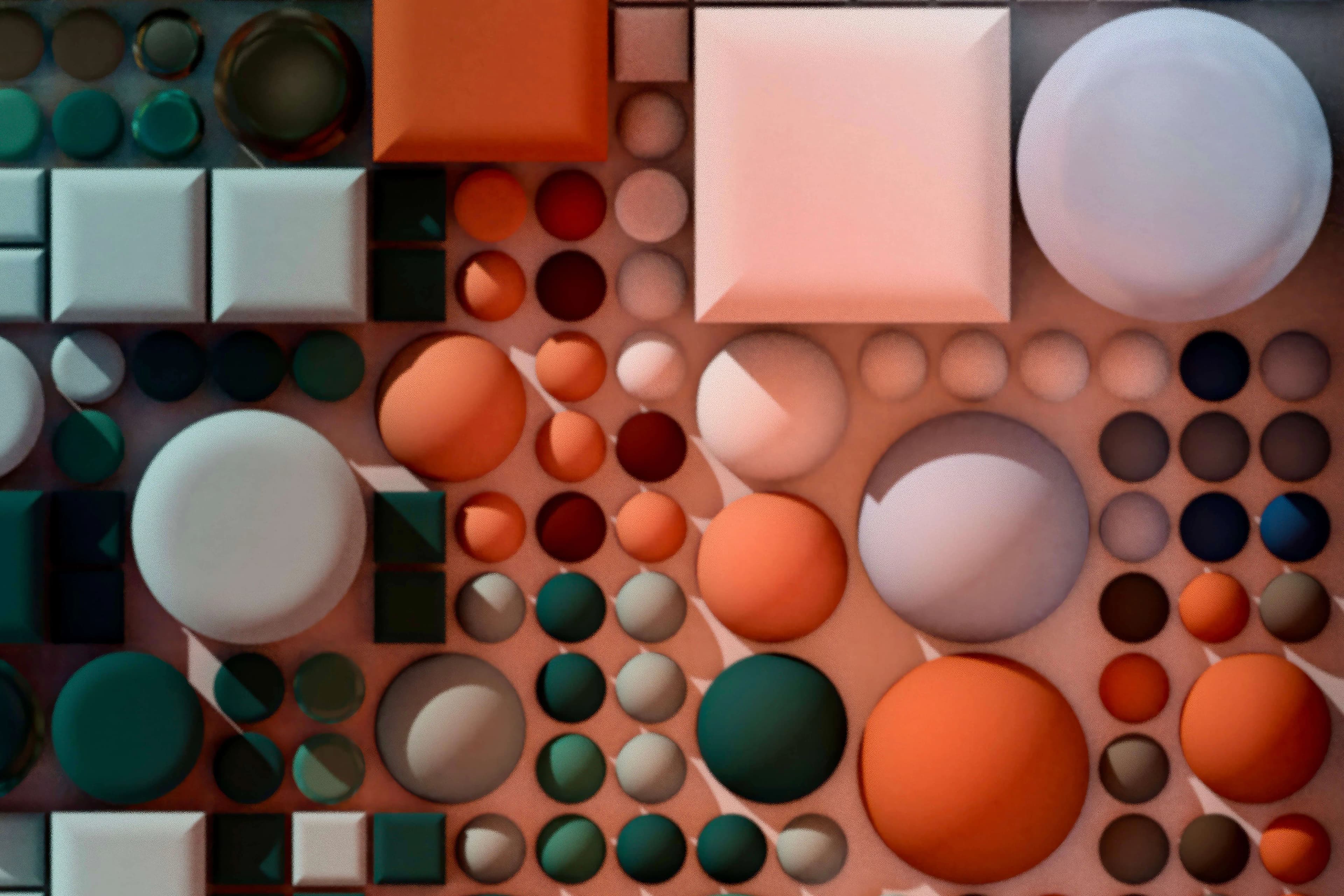
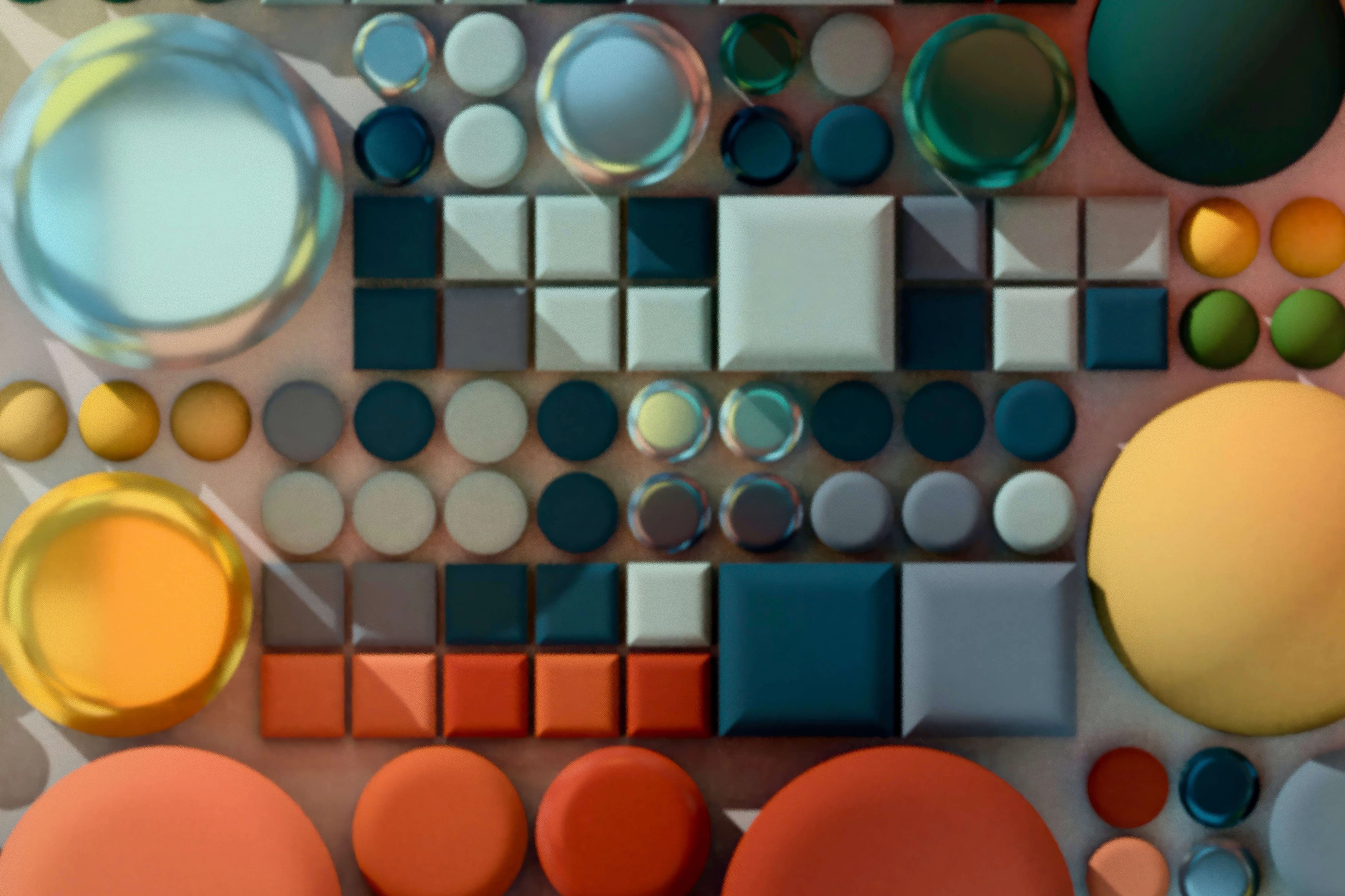
I started by simply staring at and attempting to dissect Mathias' output and code over the course of a few days. I enjoyed zooming in on the super res image and seeing if there were certain sections that were inspiring for whatever reason, that I could pull a composition from. I started with one sketch, but abandoned it pretty quickly due to a "third-party" idea I had during these days of digesting his output. As with most of the art I make, a random, innocuous situation from my day-to-day can end up having tremendous influence on the output of the project.
My wife and I are expecting our first baby in a couple of months, and naturally, we are nesting a bit and cleaning house. I had a large amount of colored, clear acrylic blocks and spheres I was using to prototype some light/color transference stuff for another project over a year ago. I haven’t touched them since, and they've been in a pile in a corner collecting dust. My wife was telling me to throw them out or at least store them somewhere, and I thought it might be nice to keep them around for when our kid gets a little older, as they are very pretty and can be built into structures. So I found a big box and started putting them in. They are unit-based, so they fit together very nicely and fill up the box perfectly, almost to the millimeter. I remember thinking how satisfying it was sliding the last block in, kind of like reverse Jenga. Anyways, right then I realized there was a huge similarity between the shapes/shards/spheres in Mathias' sketch and the collection of block and sphere geometry in front of me. So I decided to take the chaos/explosion of Mathias' output, organize it, and put it into "my box". I have a feeling the real blocks will once again return to a chaotic state!
( 4 ) What did you change and why?
From a technical level, I read through most of Mathias' code and decided it was much too well-arranged and professional for the IDE and process I usually use (disorganization-focused and impossible to read). So I converted a few of the bits I planned on using to my own system, which usually consists of a single text/js file. I also almost exclusively use three.js and not P5, so much of the project structure changed to the three library.
Compositionally, Mathias' sketch read like an explosion to me. So I wanted to reverse this and create something ordered. I've been trying my hand at raytraced transparency lately, so 3D-ifying it to more closely emulate the acrylic blocks that inspired the sketch became a primary goal. I loved the posterized aspect of Mathias' sketch, but I wanted to change it substantially to better suit my current interests and codebase, and, obviously, to more closely emulate a real "box of blocks."
( 5 ) What did you keep and why?
I kept the color palette and the shapes/structures visible in Mathias' sketch. Despite them looking quite different and rendering in a very different way, I wanted them to read like family members in the same world, and for a visual connection to be obvious.
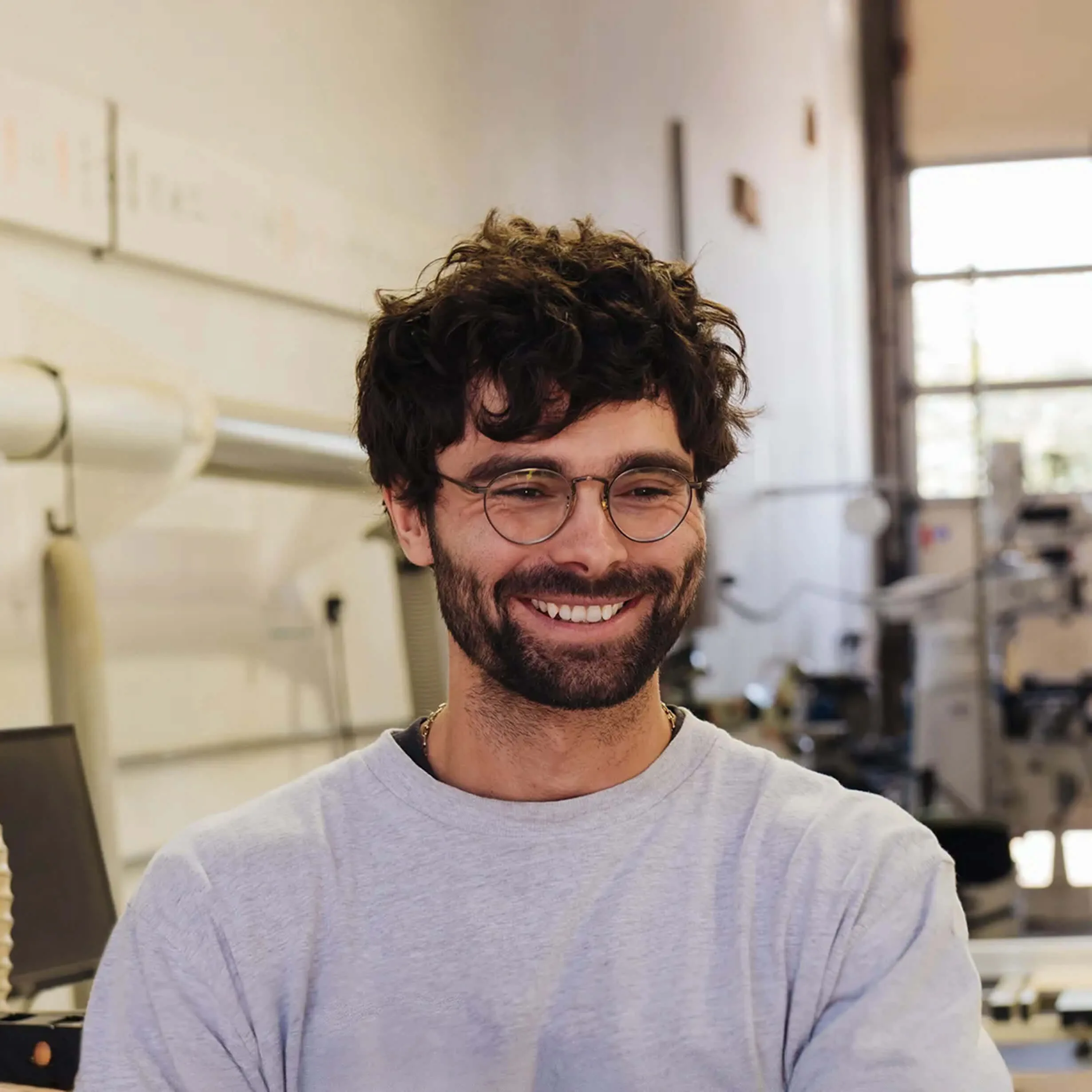
mpkoz a media artist and software developer currently based in Seattle, WA. He makes code-based digital and physical artwork that utilizes real-time graphics, interactivity, and new forms of fabrication technology.