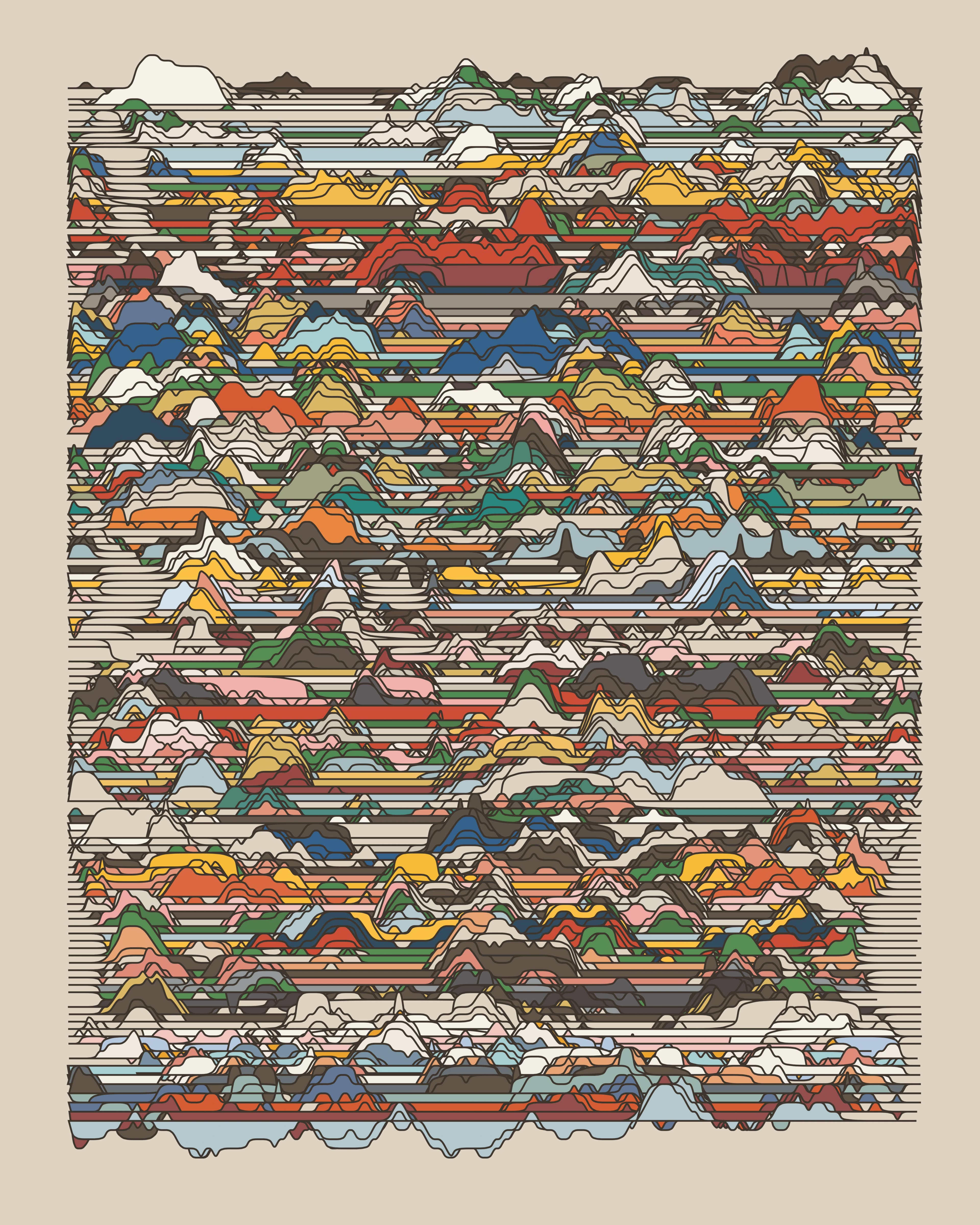
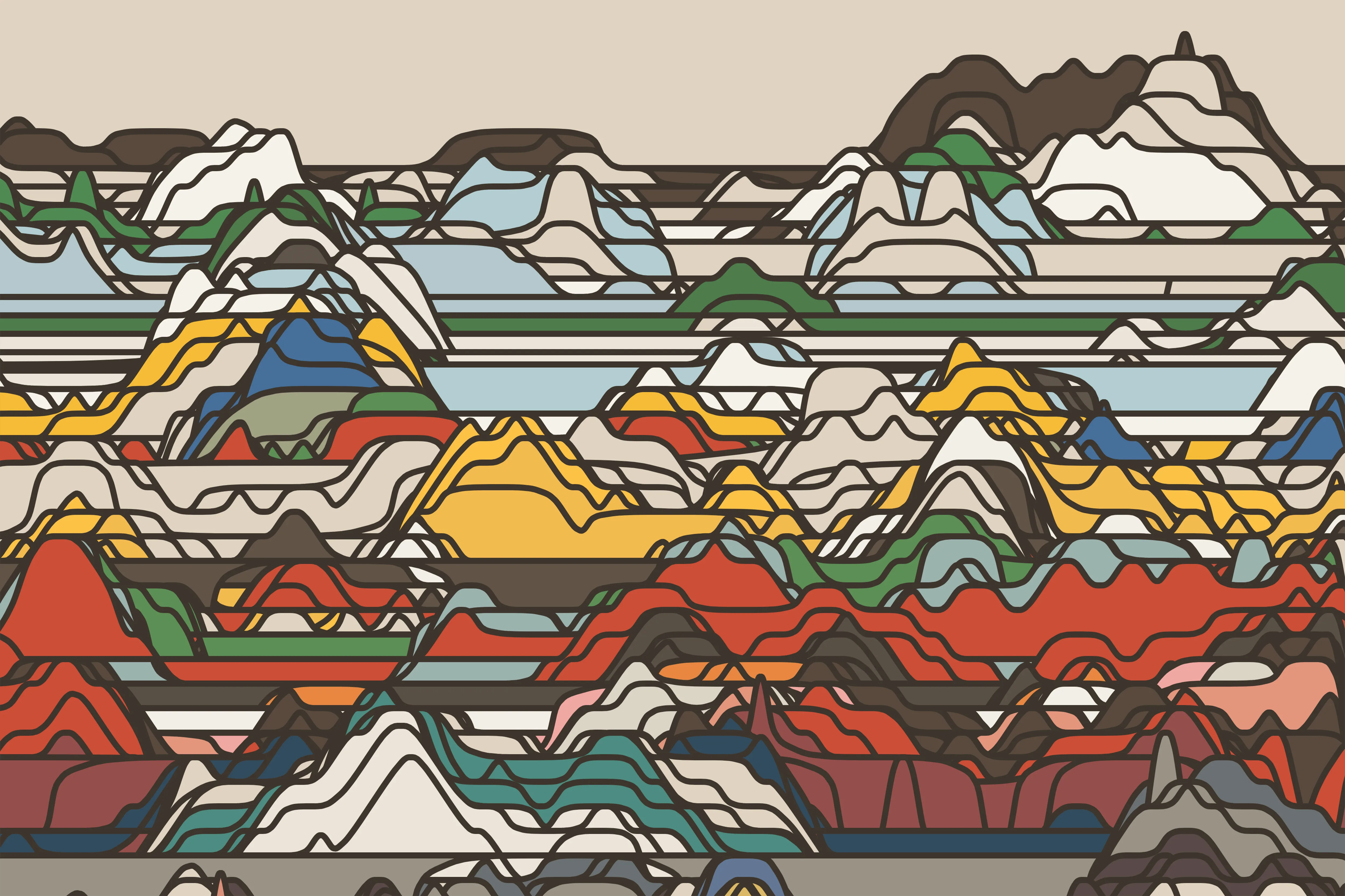
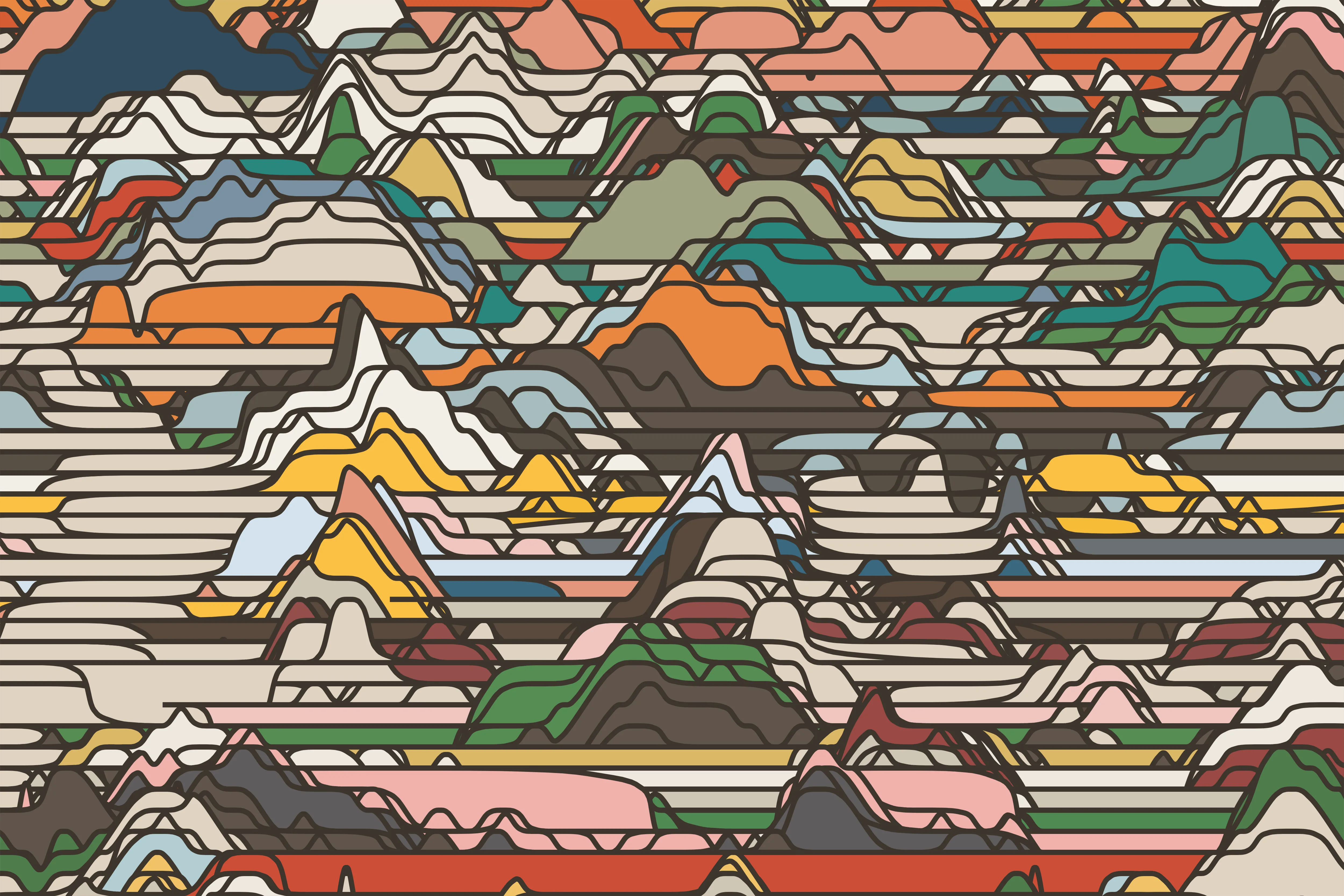
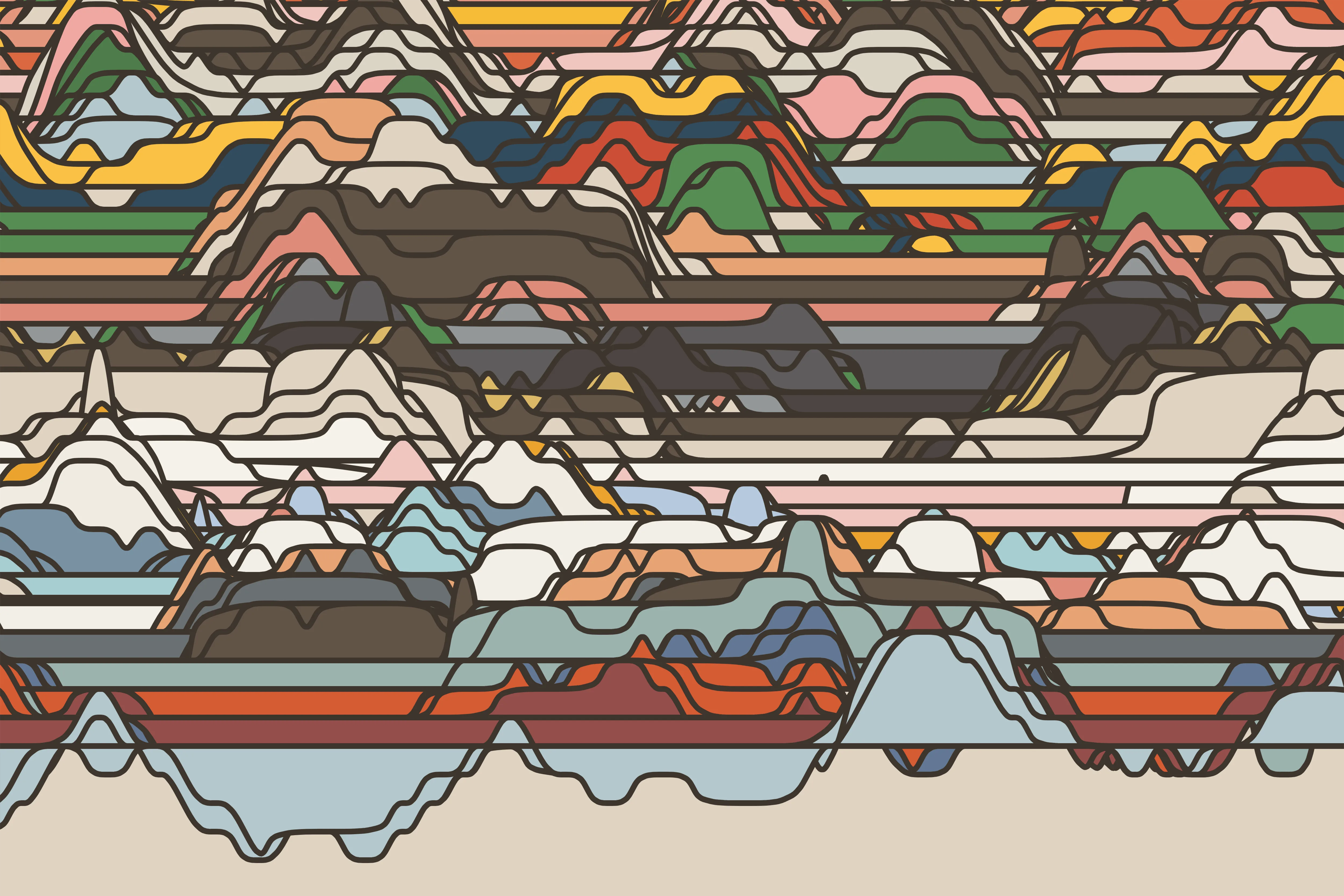
( 1 ) What was the original spark for this project?
The idea for this project came together in the summer of 2025, while I was in Madrid. I had been talking with Han Lee (aka @bonafidehan) about potential group projects that might be suitable for Shape. While I was walking down the street one day, I recalled seeing a small "chain of art" project that some local artists in Austin, Texas had created about seven years ago. It occurred to me that a generative/algorithmic variation on that idea could be particularly interesting, because the actual code behind the art could be passed from one artist to the next. That also felt in line with the general spirit of sharing that algorithmic artists often have, probably due to our proximity to so many open-source software projects.
( 2 ) Why did you want to structure the collaboration as a sequential hand off instead of a typical group exhibition?
The whole idea for the project first came to me as a sequential hand-off, so it always took that structure in my mind. I general, I was interested in creating the kind of show/project that I as an artist would want to participate in. I’ve seen many group exhibitions where the artists given either too little structure (i.e. there is nothing to really pull the show together) or bad structure (the prompts feel actively harmful to the artistic process). With this format, I was hoping to give the artists a clear starting point ("please respond to this work by the previous artist") and clear structure in terms of time and effort (each artist had exactly two weeks to complete their work). As an artist, that combination of a clear starting point and good structure makes the work really enticing. The icing on top is that this structure can also potentially push the artists into a new area of exploration, if the artist they are responding to did made significantly different than what they normally create.
( 3 ) What felt exciting or risky about passing a generative system from artist to artist?
Certainly it seemed like some artists might be faced with a tough challenge. Perhaps they would be handed a codebase that was technical or used techniques they weren’t familiar with. Others might be handed a work that, visually, was very "complete" or tricky to find a way to reply to. And of course, the artist at the end of the chain might feel some pressure to try to tie things together with a nice bow. Those were all both risky and exciting things about this format! Sometimes challenges are exactly what an artist needs, in order to produce fresh work.
( 4 ) Did the creative process for your piece change knowing others would inherit the code?
To a certain extent it did, mostly because I was mindful that the artists that came after might use parts and pieces of it. And on top of that, there almost needed to be space for a "response" to happen. I felt that if I made the work too conceptually busy, it might actually hurt the ability of the next artist to make that happen.
( 5 ) How did creating this work differ, if at all, from past works? What elements were you keeping in mind and why?
In terms of actually making the work come to life, that was very much in line with how I typically work. The core visual ideas for this came out of following loose threads from previous works, and from sketching. That sketching process is just quick, low-stakes image creation that I like to do, similar to what you might do with a sketchbook. It’s just that in this case, I was quickly playing around with code and algorithmic ideas. Some of the ideas that come out of sketching really catch my interest and warrant further exploration. This was one of those ideas.
I was aware that the responding artist might want to use almost any aspect of the work that I was making: the color palette, the outlines, the softened-stair-steps, the (lack of) texture, and so on. At the end of the day, I was always going to make a piece of art that I personally loved, regardless of those considerations. But maybe they nudged me towards keeping the idea more tight, clean, and extensible.
( 6 ) What rules did the artists follow when receiving the code from the previous contributor?
I gave the artists three guidelines, with the most important first:
1. Make a piece of art that you love.
2. Look for elements of the previous work that you can reuse or build on in your work. Those may be colors, textures, compositions, patterns, or other qualities. Reusing some of the code may help with this.
3. Look at the whole chain so far, and try to take a next step that "makes sense".
( 7 ) What kinds of elements tended to survive from one artist iteration to the next?
Every artist had their own interpretation of what it meant to "respond" to the previous work, which was wonderful to see. The most common connecting lines would be "motifs", but many artists thought about the connection in a conceptual way, and found an entirely different axis around which they could rotate the work.
( 8 ) Did the work move in directions you didn’t expect when the project began?
Every new work that came back to me was a surprise. Every piece was clearly the work of that artist, because their style and taste are always going to come through. But I was super pleased with how creative every artist was, and how effective they were at imagining a new direction for the ideas at play.
( 9 ) How much of the previous code typically remained when the next artist finished?
Overall, it was probably a pretty small amount of code, but it was carefully chosen, and could play a significant role. I don’t want to give away a spoiler, but one artist in particular reused a piece of the previous artist’s code in a way I never saw coming!
( 10 ) Do you think of the final sequence as one artwork or ten separate works?
In many ways, it is both, and that’s something I love about this project. Each work is absolutely strong enough to stand on its own, independent of the project. But at the same time, every work is is quite directly linked with what came before and after it. You can also easily see the care that the artists put into working with each other’s ideas, helping to ensure that the entire body of work came together as one shared creation.
( 11 ) What does the project say about collaboration in algorithmic art?
In algorithmic art, there is the opportunity for a type of collaboration that really can’t happen elsewhere, and that is in the sharing of code. It’s kind of amazing that you can give another artist an entire functioning idea, and they can just immediately use it. Or they can open it up, understand it, and extend it or flip it in a way you didn’t expect.
( 12 ) How should collectors think about owning a work from the middle of the chain versus the beginning or end?
I think all of the works in the chain could easily stand on their own, without the context of the project. But for me, the special thing to pay attention to is how the artist worked with the ideas presented by the previous artist in the chain. There are some really brilliant things happening in the middle of the chain around this.
( 13 ) What makes collecting the full sequence meaningful?
While the individual pieces are incredible, I think the entire chain comes together as its own kind of "work". With how interconnected the pieces are, it’s fascinating to see the entire thing at once, and jump back and forth visually, noting the way that ideas are shared and morph.
( 14 ) What did you personally learn from organizing and watching this collaboration unfold?
Every artist thinks about their work in a unique way! Many of the artists spoke with me or wrote to me about the work they created, and why they went a particular direction. Obviously, I already knew that these were a lot of unique individuals, but it was still wonderfully surprising to see the diversity of thought in action. Some artists operated at a highly conceptual level, some primarily approached their work from a technical perspective, and others broke the work down into what I would call purely "visual" ideas. I think when you look at the chain, you can see those differences come through in the art, too.
( 15 ) If someone only sees one image from this project, what do you hope they understand about the experiment?
Almost all art is a response to something else, in some kind of way. But these are specific responses to specific pieces of art! Enjoy the opportunity to see a visual conversation unfold and take the time to look at the full chain, too.
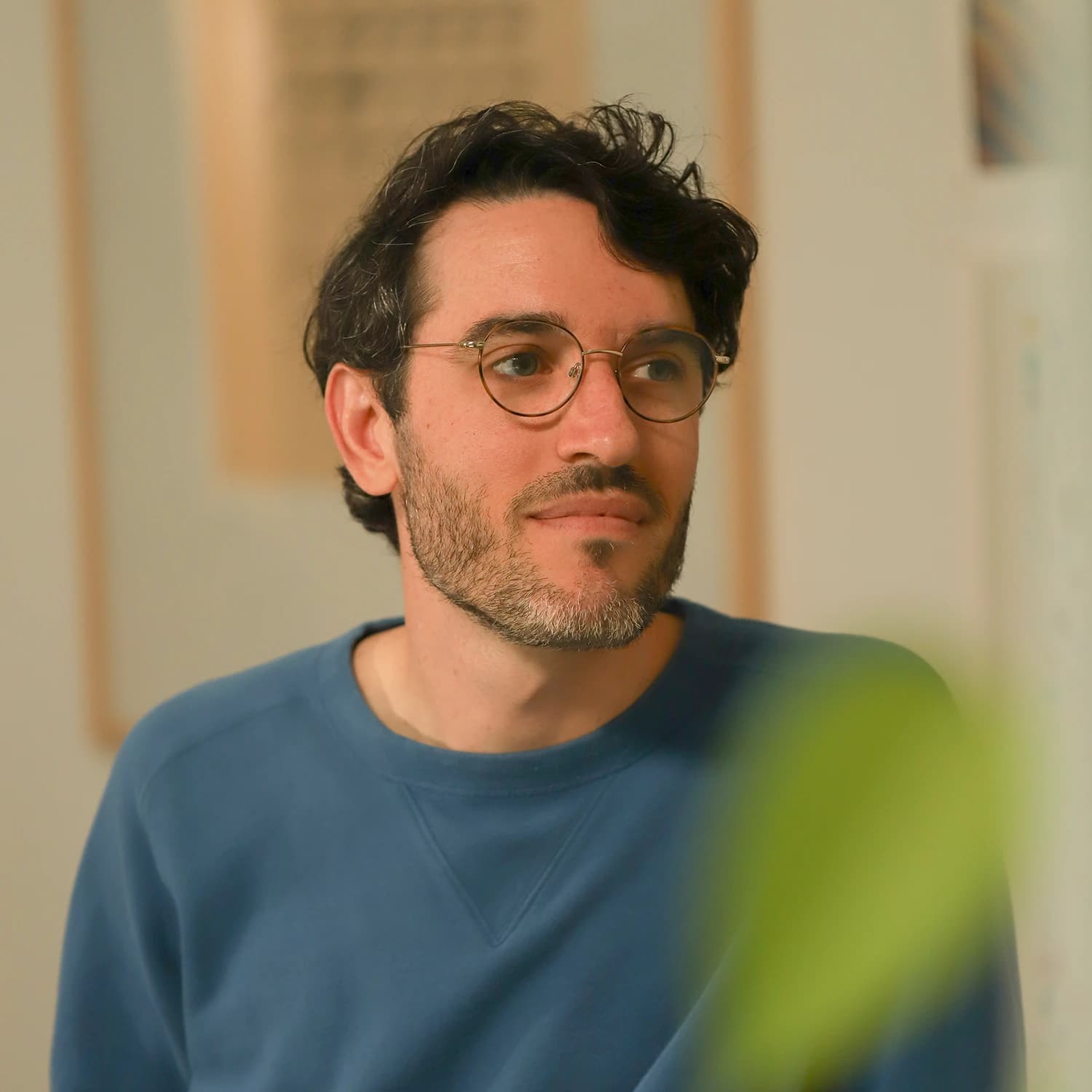
Tyler Hobbs is an Austin-based visual artist, working with algorithms, plotters, and paint. His work focuses on computational aesthetics, how they are shaped by the biases of the modern computer, and how they relate to the natural world around us.
His work has been exhibited globally, including solo shows at Pace Gallery in New York and Unit in London. Hobbs’ pieces are part of the permanent collections at LACMA, SFMOMA, and the Museum of Art+Light.