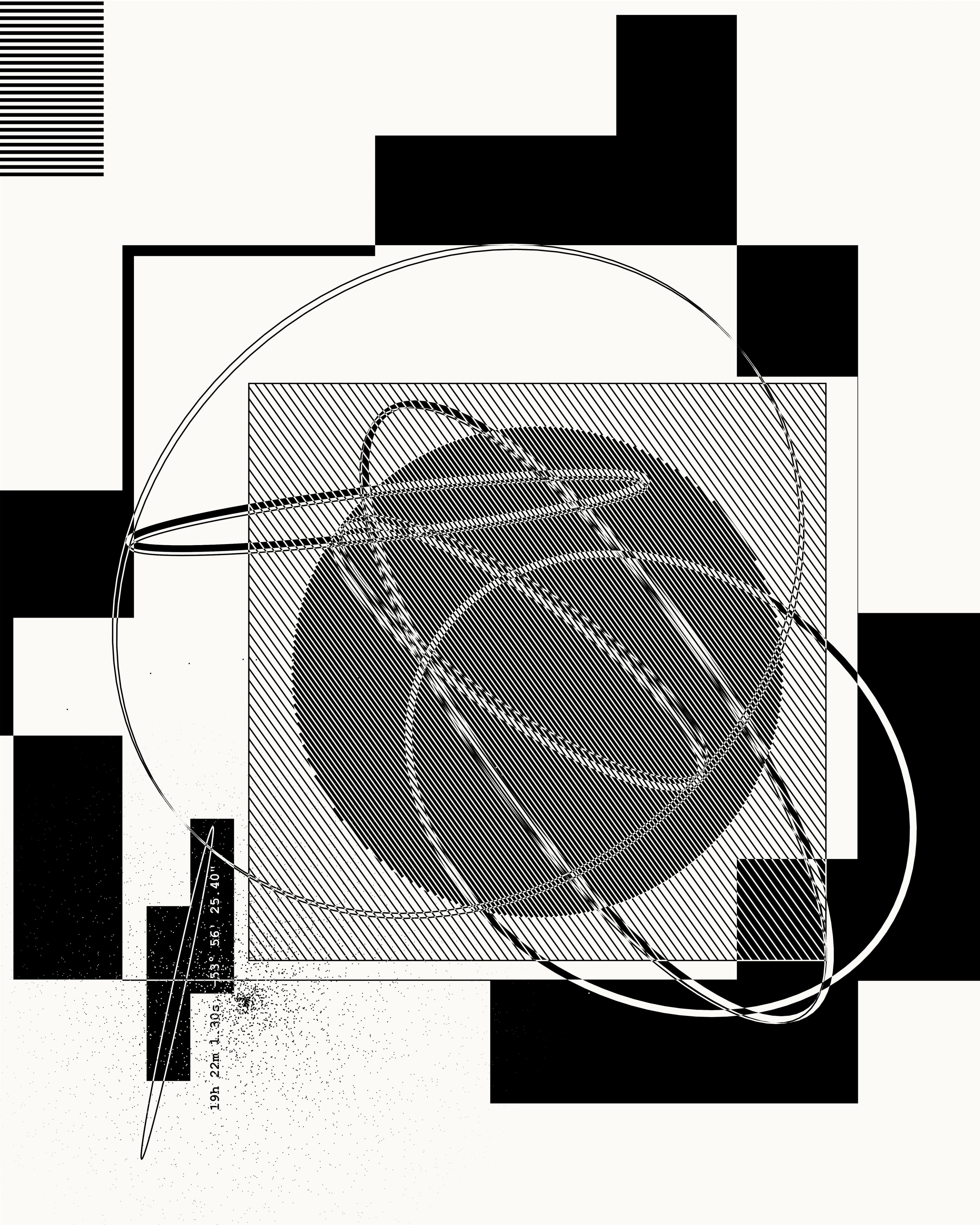
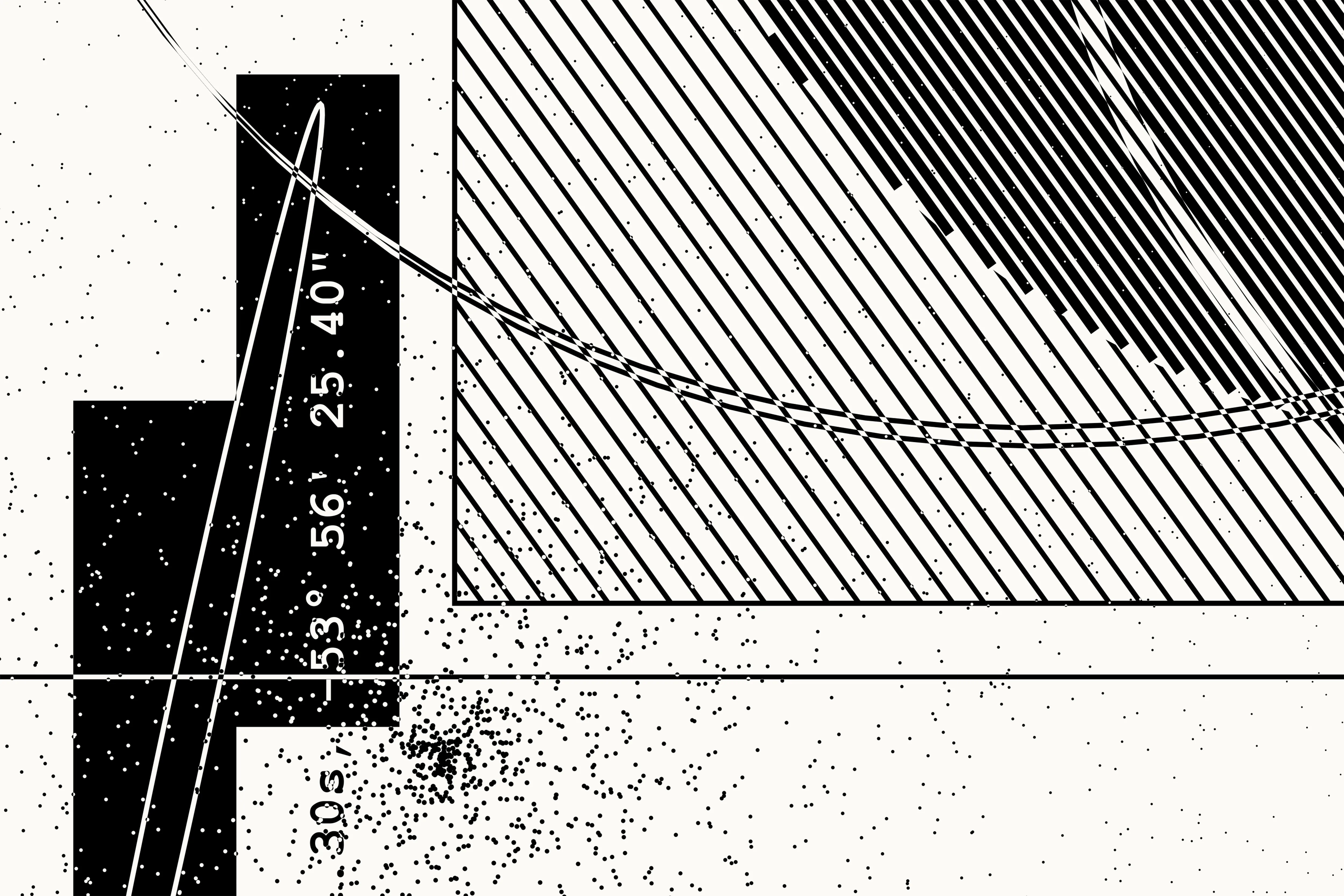
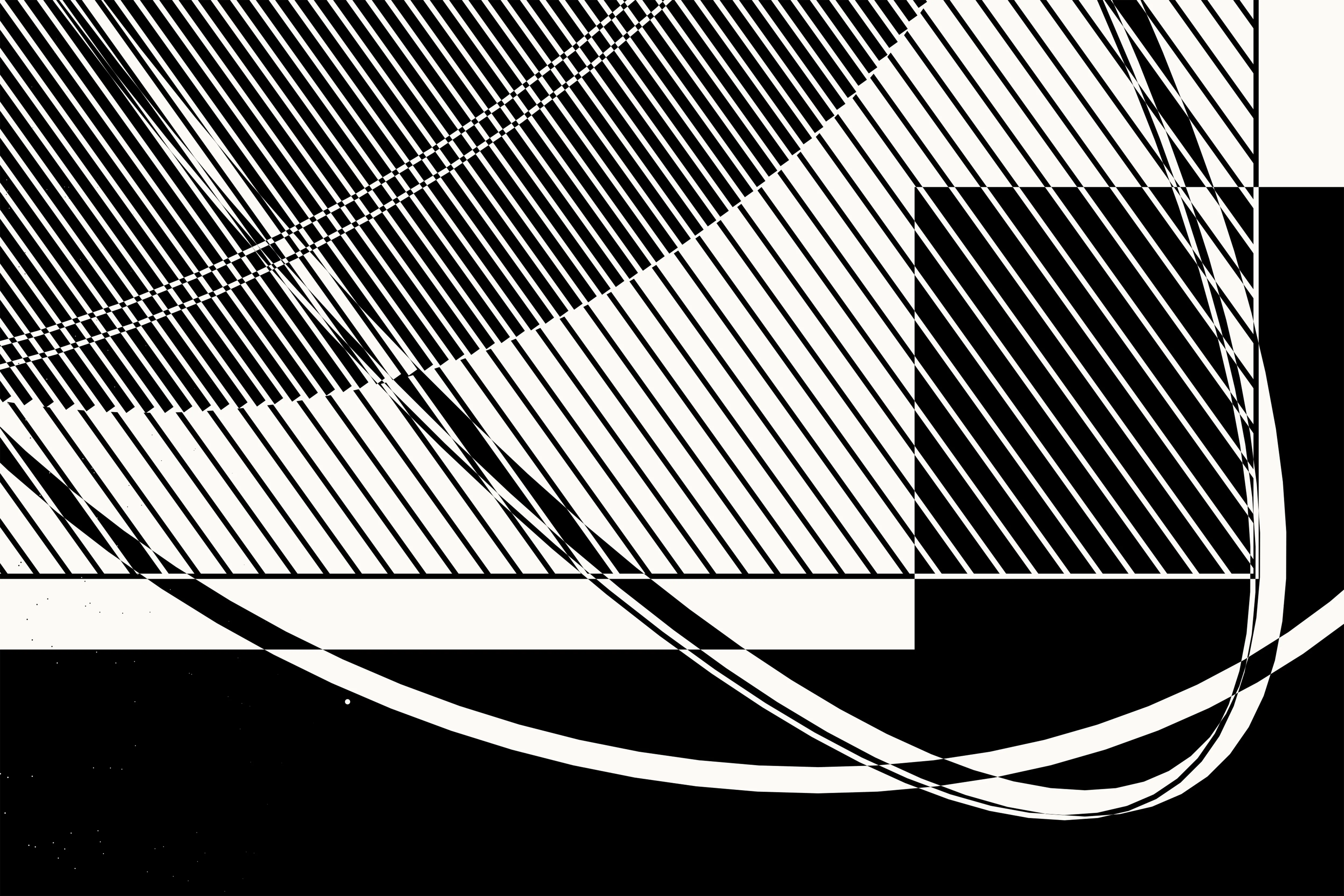
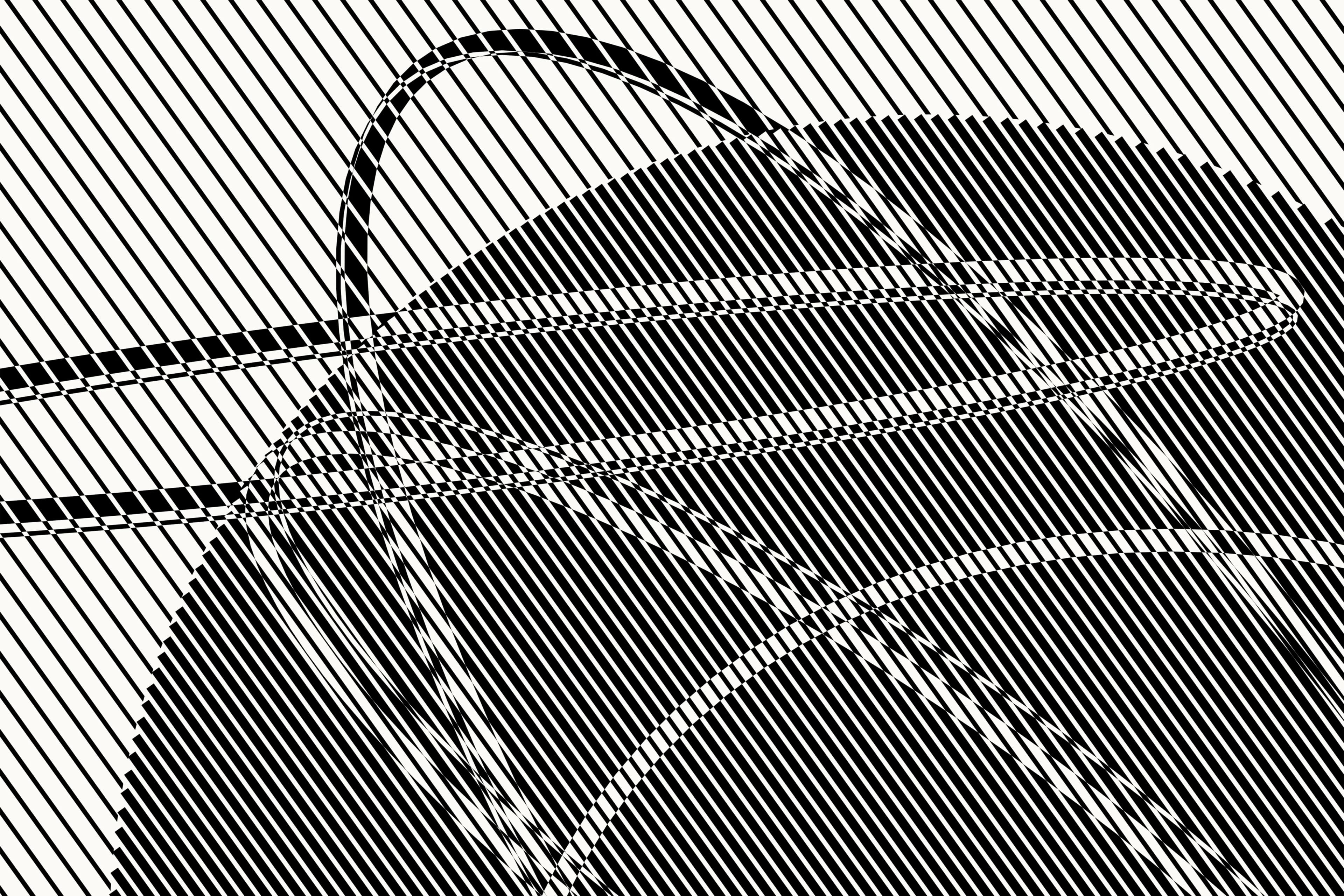
( 1 ) What were your first Impressions of the project?
I loved the idea from the beginning! When I saw the outputs of the previous artist and the development of the chain, I immediately knew what I wanted to do--try to arrive at an algorithm that represents myself and is consistent with the general structure.
( 2 ) What surprised you?
Visually, I was surprised by how different the first output in the chain looked compared to the second, which made me feel more comfortable letting my imagination run free.
( 3 ) What was your creative process?
When I saw the state of the chain, I knew I could arrive at an idea that would work within the general intention. From there, it became about creating a balanced and restrained piece. In general, I try not to use many colors, or I work directly in black and white--which is what I ultimately did here.
( 4 ) What did you change and why?
I noticed a pattern emerging in the chain through the use of the grid and a tension between the two-dimensional and the three-dimensional. I reused the module's idea and tried to disrupt and perturb that grid by adding some elements and subtracting others.
( 5 ) What did you keep and why?
I noticed a grid structure organizing the previous composition. I took it and tried to disrupt it by subtracting the parts that do not intersect with the newly added elements.
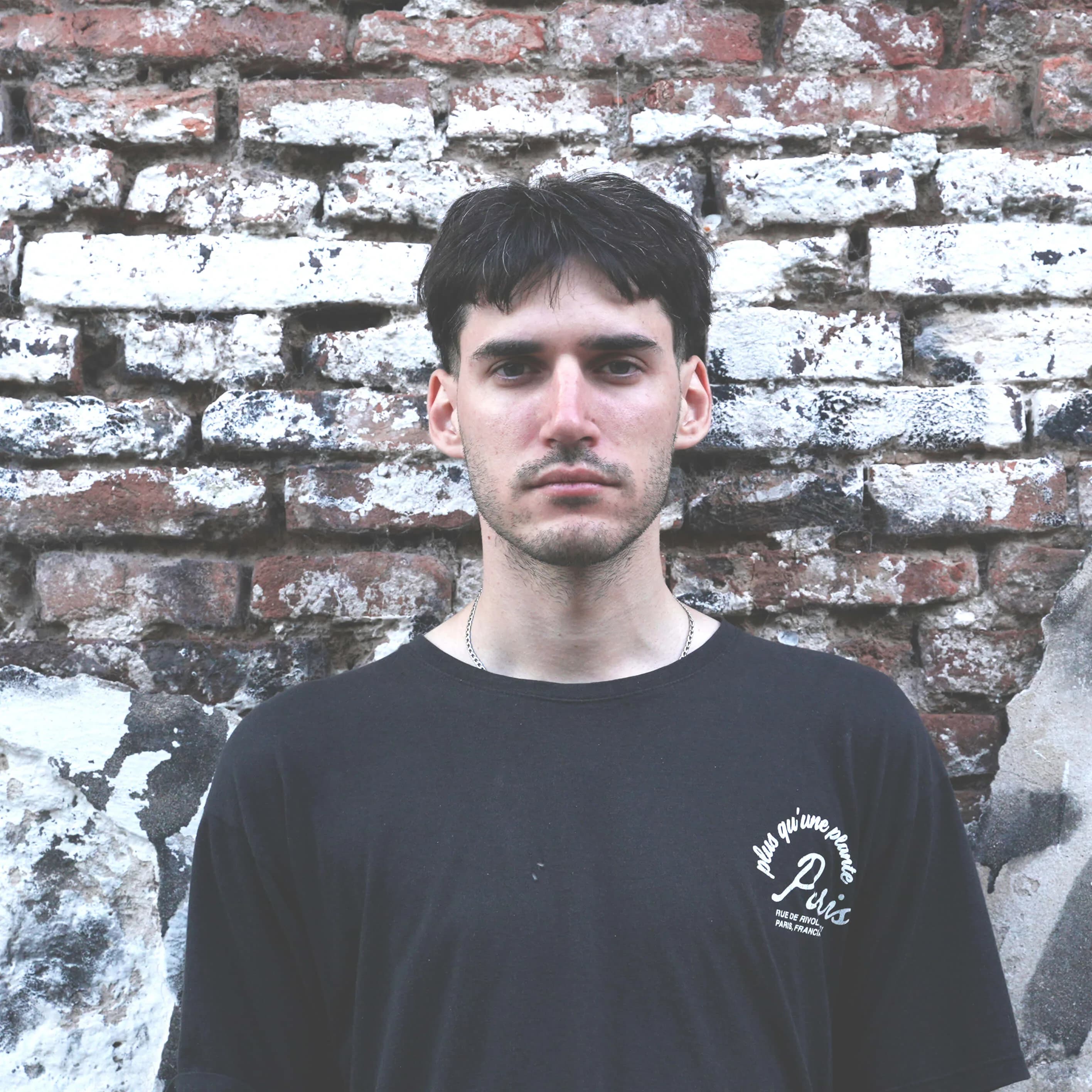
Juan Pedro Vallejo is an Argentine artist focused on creating images using generative processes. His work seeks to engage with the cinetic art tradition. He has launched two on-chain projects: Interferences on Art Blocks and Subtraction, Reconfiguration on Bright Moments.