( 1 ) What were your first Impressions of the project?
My first reaction was one of gratitude for having my work taken into account and for being considered for a project involving artists I admire and whose work I truly love. I’m also fortunate to know some of them personally, which made the experience even more meaningful. I felt genuinely lucky to be part of this.
However, as often happens at the beginning of my creative process, nerves and that fear of the blank page also appeared. Even so, when I thought about how incredible the project was and the people involved, that fear gradually turned into motivation and excitement to begin.
Once I was fully in the process, by dedicating time to the project every day, ideas started to flow more naturally, and the work began to find its own rhythm.
( 2 ) What surprised you?
In fact, from the very beginning, beyond the code, I thought about approaching the previous artist’s work through the visual composition they had created, which also responded to the other artists within the chain. The first thing that caught my attention was the amount of information and the notion of perspective.
Then, by observing the work of the previous artists in the chain as a whole, I was able to perceive a language that had been built and evolved almost naturally. To me, that language seemed to tell a story about the evolution of human beings in relation to the world through different mediums.
( 3 ) What was your creative process?
My approach began with simply enjoying the development of the project, engaging with it without expectations beyond appreciating the moment and the opportunity to contribute to a project like this alongside incredible people. From the very beginning, I took time to observe, appreciate, and reflect on the work of the other artists and what they had contributed.
I gave myself a space for reflection before starting to write code; during those days, I thought about the story and the language that had been built within the chain. From there, my contribution emerged naturally--almost as if the chain itself, through the work of the other artists, was calling for that outcome.
( 4 ) What did you change and why?
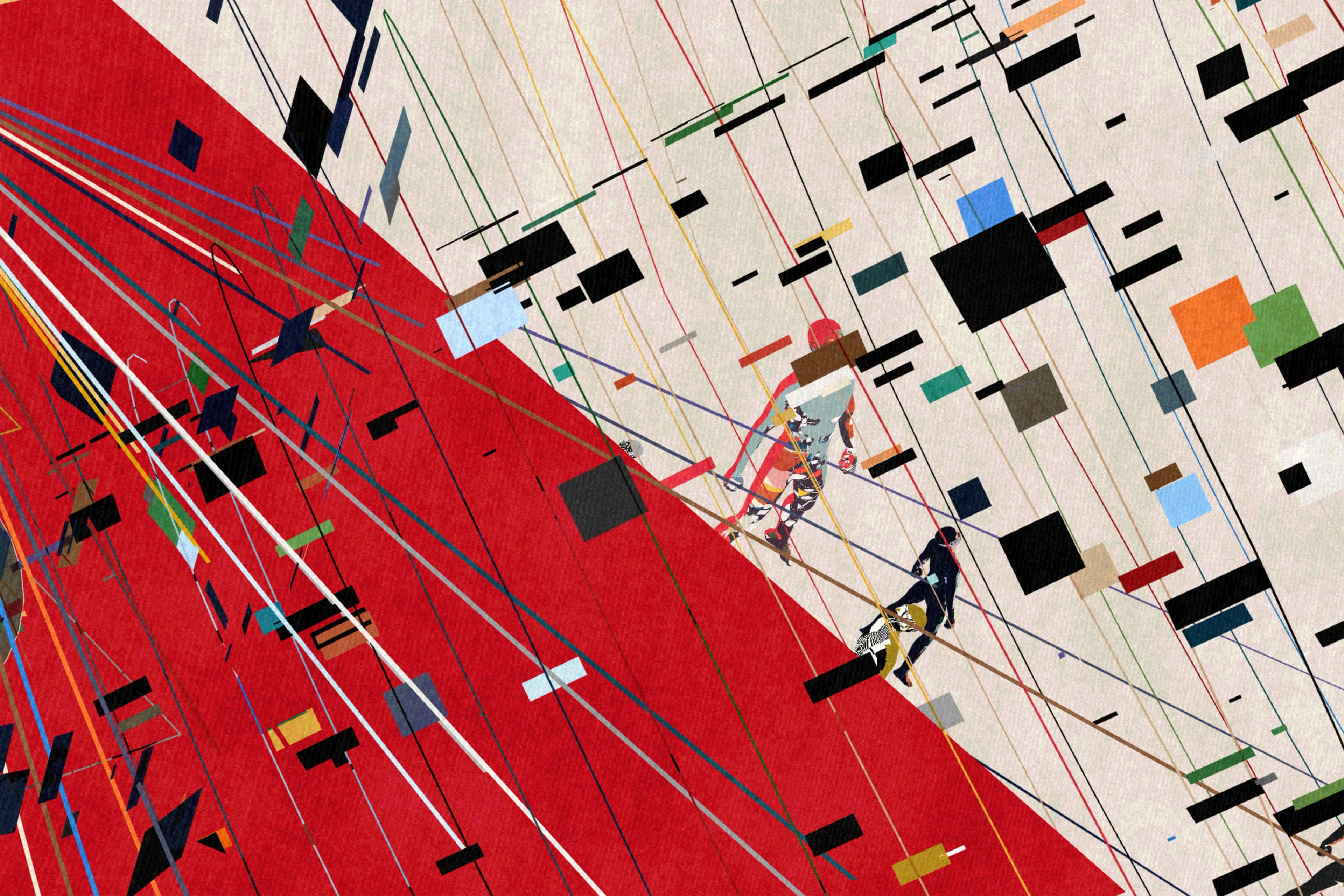
I decided not to use the previous artist’s code directly, although I did review their workflow to better understand their process. Rather than starting from the technical side, I was more interested in reading the work and the narrative constructed throughout the chain, interpreting it through my own subjectivity.
I understood the pieces as a journey through the evolution of human beings in relation to the world, across different media--from observation of the environment, through organization, construction, and fragmentation, to the digital realm and systems of information.
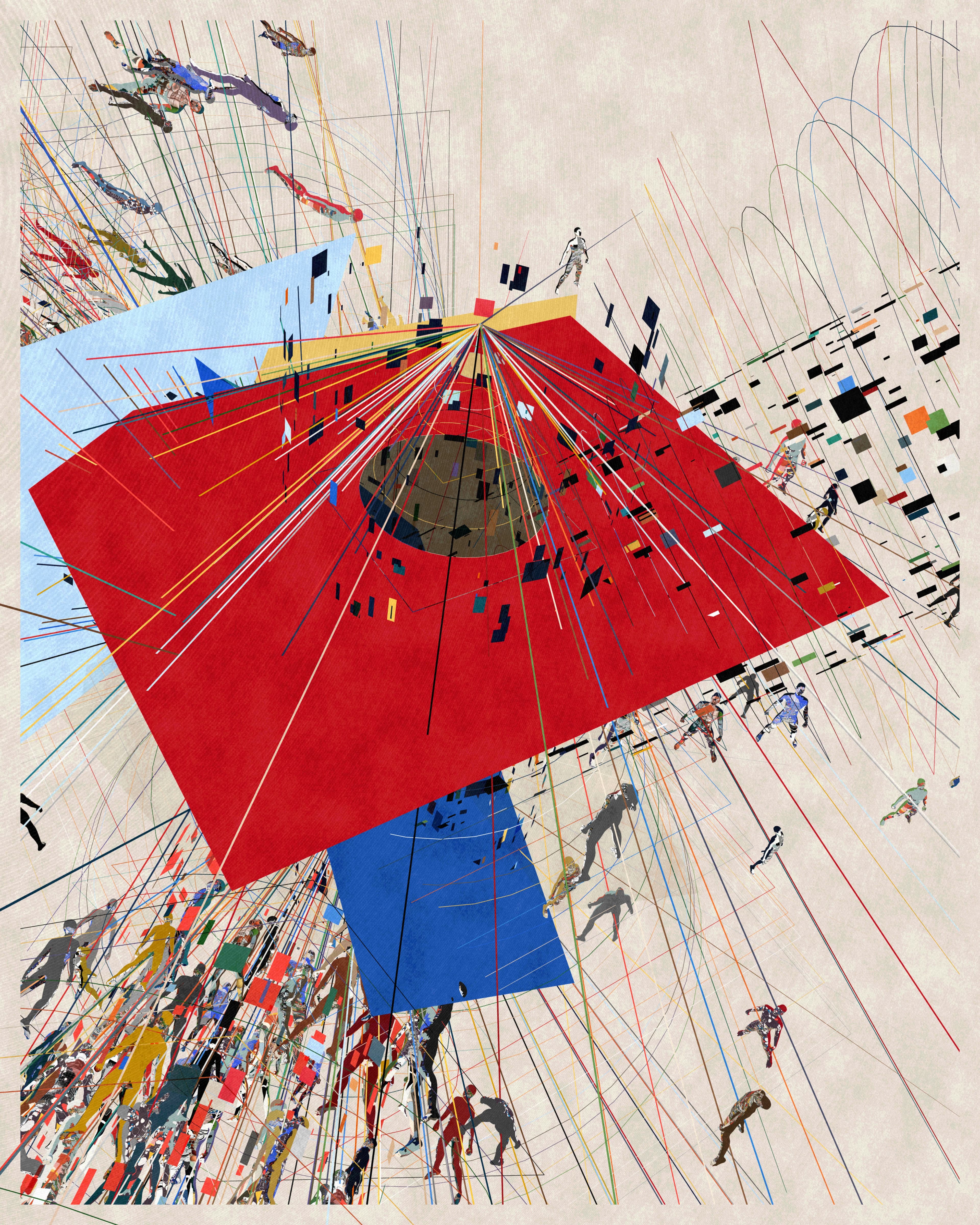
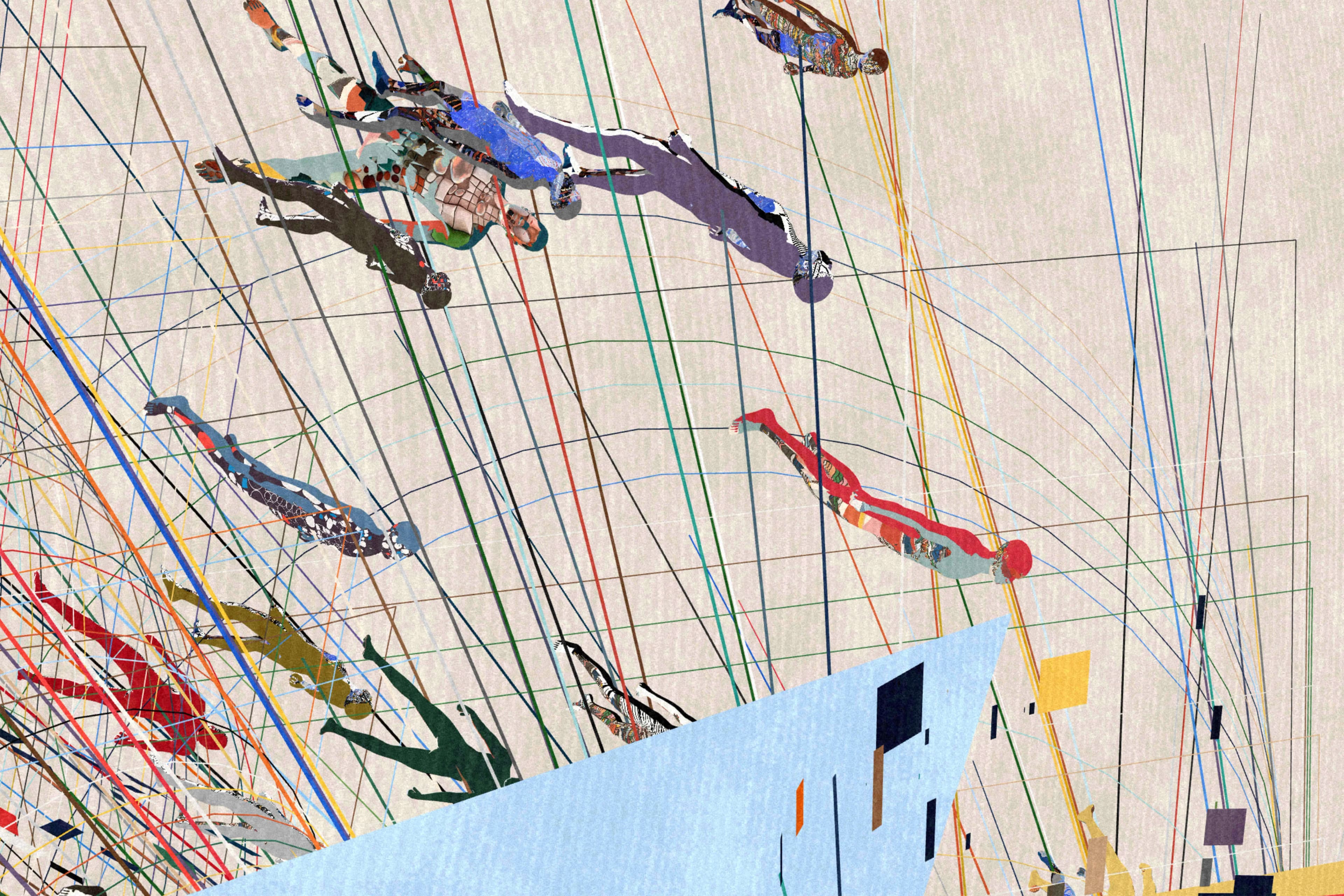
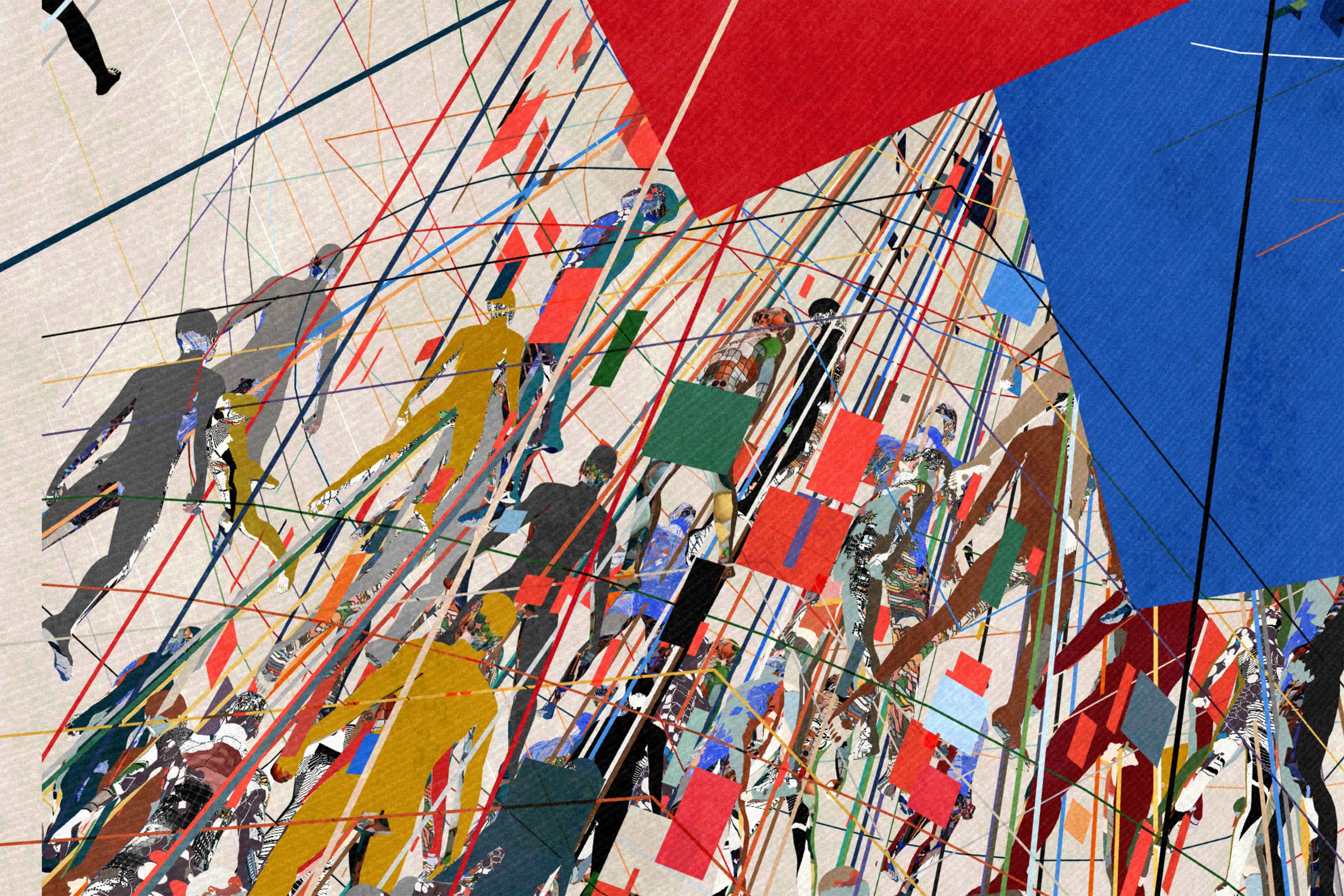
My work takes up this interpretation and proposes a vision in which these dimensions intertwine. I incorporated the previous works as textures within human figures, suggesting that our experience is built from the ideas and productions that precede us, within a continuous process of transformation.
( 5 ) What did you keep and why?
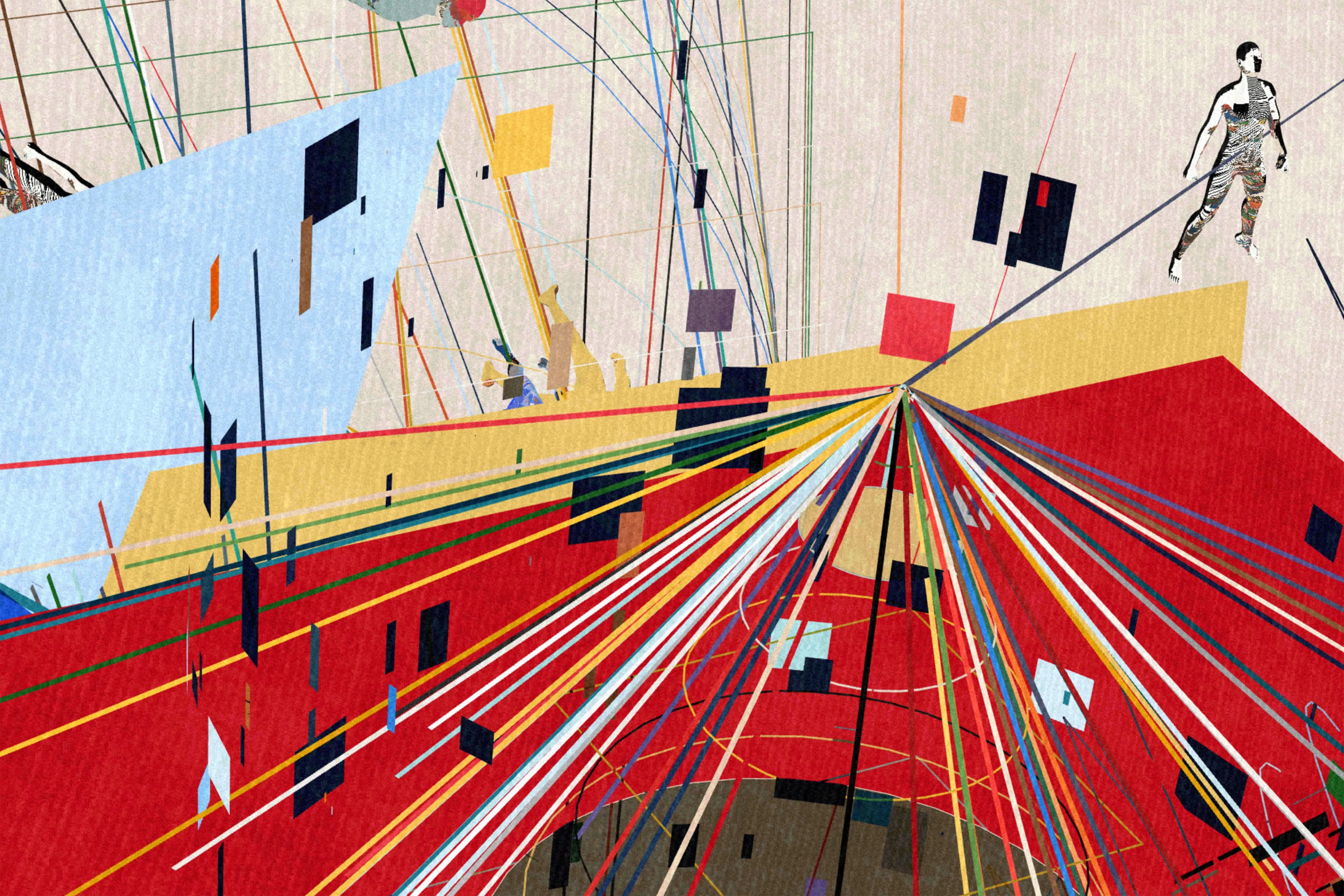
My first approach was to the work of the previous artist and the text accompanying their process. In their work, I identified a high density of information organized across different levels and layers, as well as the use of a radial perspective that not only structured the composition but also suggested a way of expanding and organizing space.
Rather than preserving specific technical elements of the code, I chose to take up that conceptual approach. I was interested in that accumulation of layers, the idea of transformation, and the way the work engaged in dialogue with the previous pieces. From my perspective, the chain constructs a narrative about the relationship between human beings and the world through different media, and that idea resonated deeply with my own practice.
For this reason, my contribution seeks to continue that logic, but from a broader viewpoint--a kind of zoom-out that allows for the reflection of the different dimensions that human beings have inhabited and transformed, understood as spaces that coexist and constantly intertwine. What I take from it is a perspective that grants access to these dimensions, in which the human presence appears as an element that traverses and articulates them.
Juan Rodríguez García is a generative artist, professor, and student. His work explores the relationship between fundamental concepts of design and programming through the use of technology and code as a medium for creation and expression.