( 1 ) What were your first Impressions of the project?
Having never written a shader before, I initially got a bit intimidated by Michael's (mpkoz) code. I have been wanting to learn some shader code for a long time, so I was excited to use this project as a way to learn some concepts and methods.
( 2 ) What surprised you?
Michael's work was grid-based, and I thought I had an idea of how he did parts of it, related to positioning objects at various scales within a grid. I was wrong; he had a completely different approach, and I was delighted to reuse it when making my own piece. It opened some new doors for me.
( 3 ) What was your creative process?
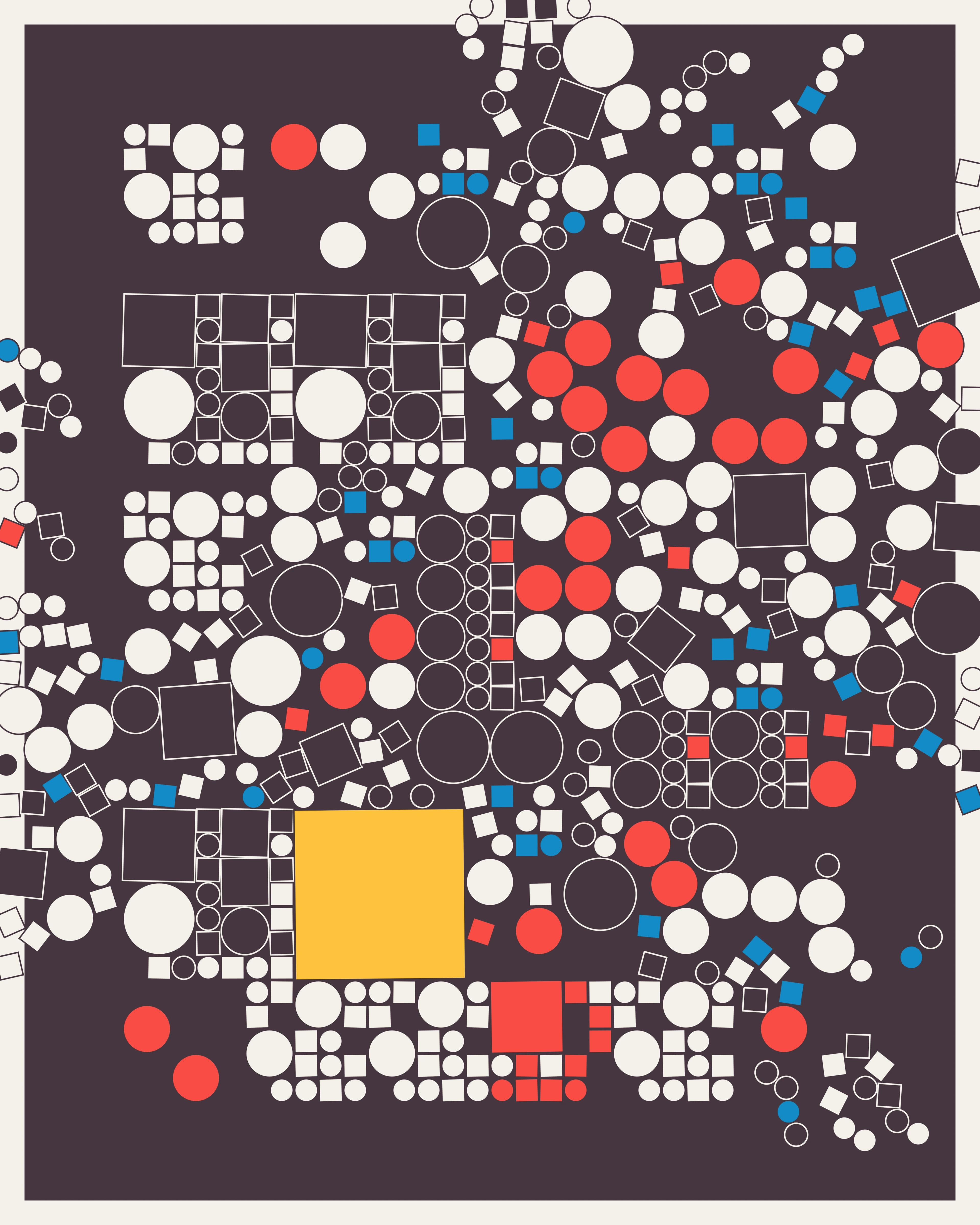
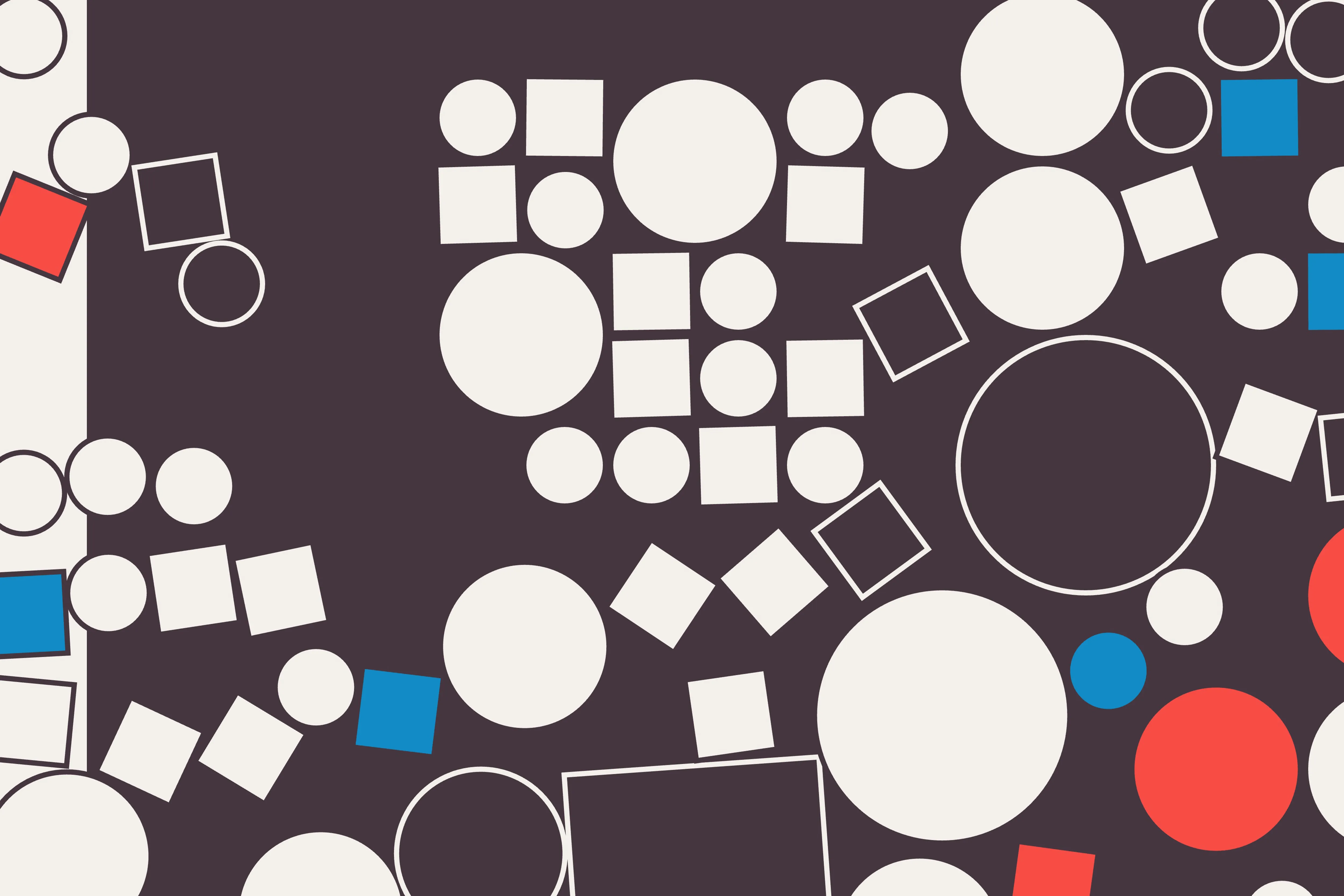
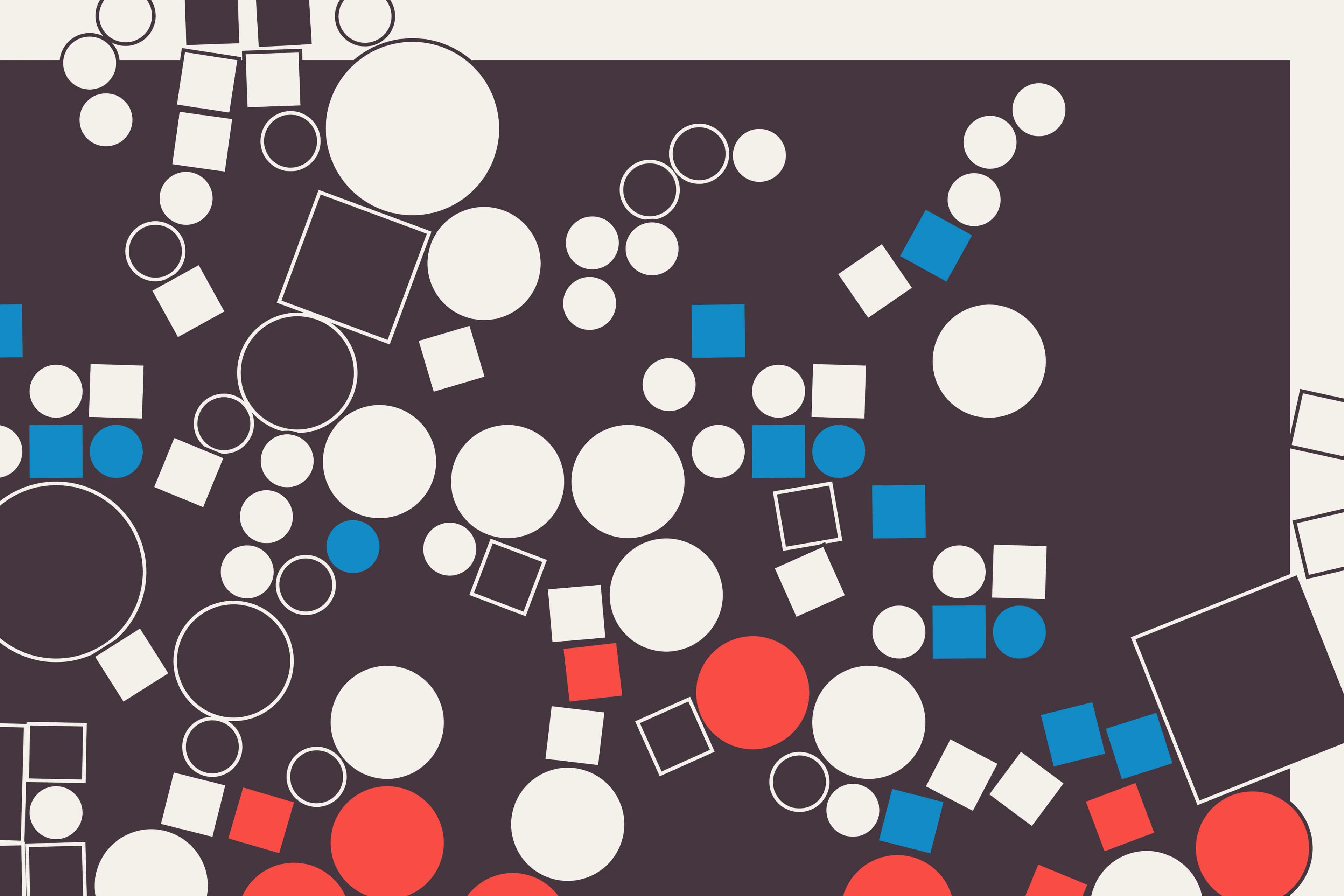
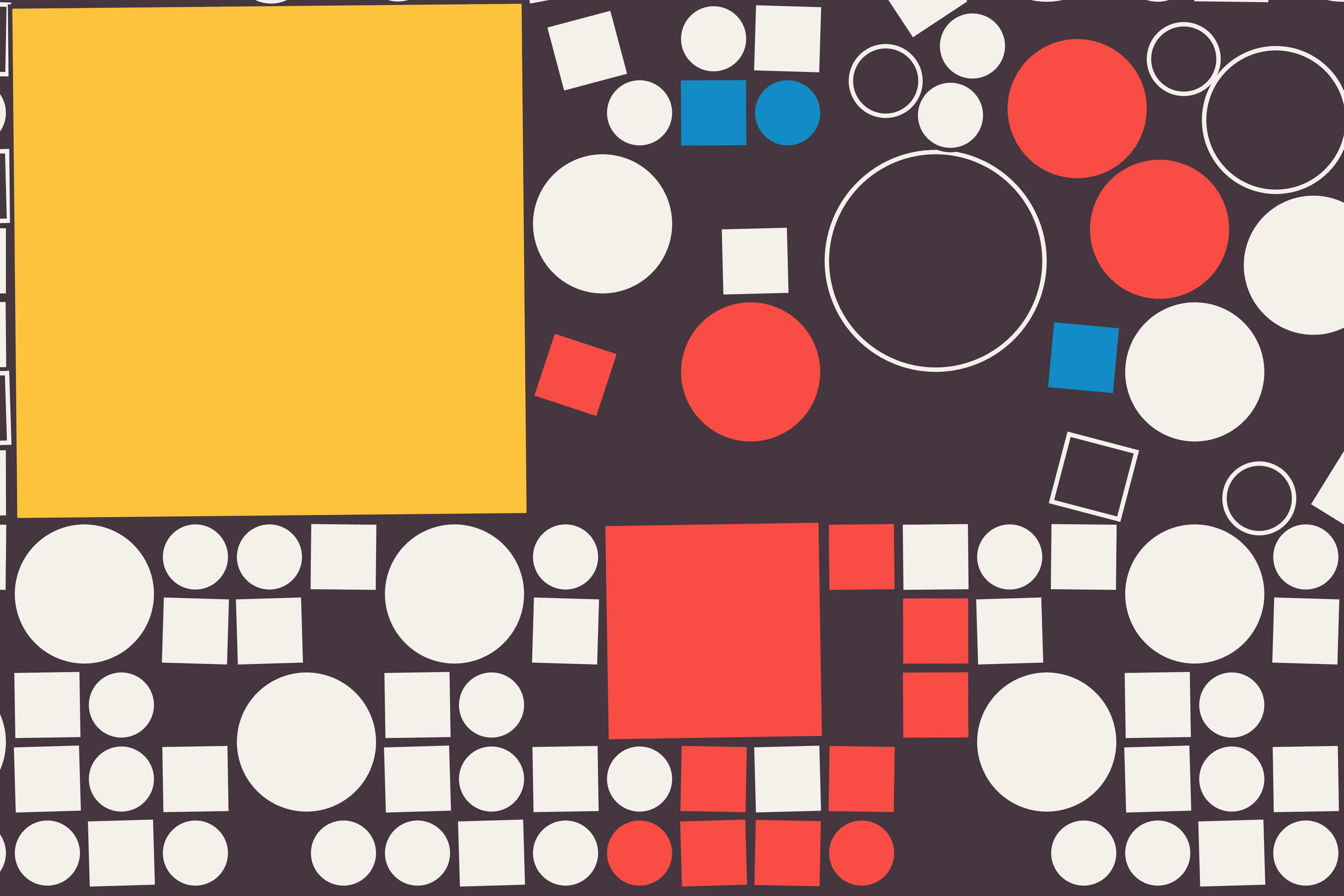
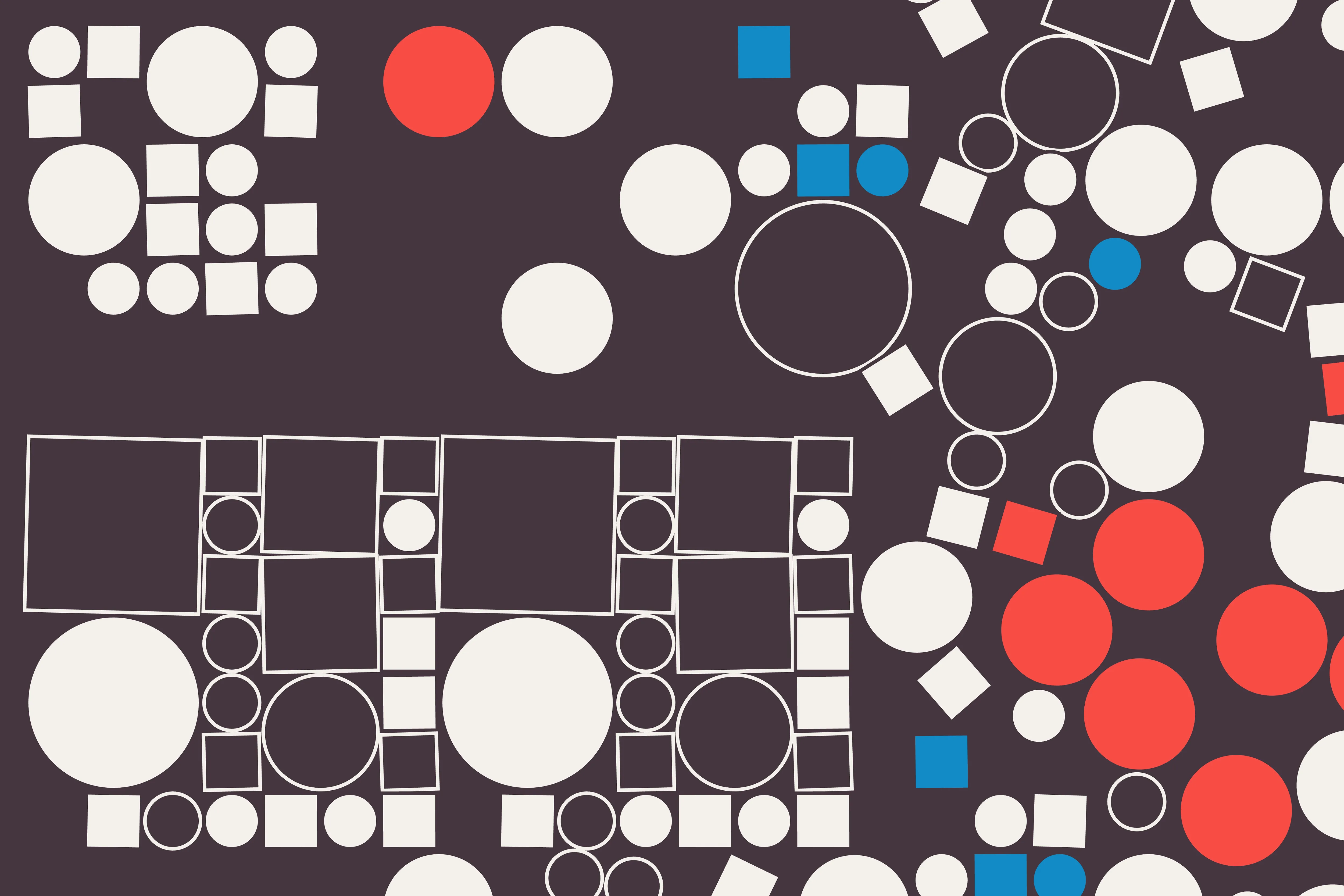
I really enjoyed the underlying structure of Michael's work, so I wanted to use that as a starting point. I wanted the structure specifically to be the "link" between our works. I then experimented a lot with patterns and repetition, and ended up with a generator that made a handful of shape groups that were "stamped" across the canvas. The finishing touch was to introduce elements that came from the same pattern groups, but did not confine themselves to the grid, giving an explosion effect in nice contrast to the grid.
( 4 ) What did you change and why?
I added quite strict pattern rules to how the various shapes would appear, and then I made it explode. An obvious difference is the rendering method, where I went for flat colours and a more graphical look rather than a 3d render.
( 5 ) What did you keep and why?
I think I preserved the underlying structure very well, with squares and circles of various scales arranged in a grid. It was somewhat familiar to me, but also done in a way I had never done it, so still very exciting to explore.

Kjetil is a generative artist based in Trondheim, Norway. His work is code-based and revolves around generative structures, algorithms, and visualizations. Architectural constructions and rule-based systems are recurring themes within his work.