( 1 ) What were your first Impressions of the project?
When I first heard about the project from Tyler, I was very intrigued by the concept. Since my prior experience consists of solo projects with generous timeframes, I'm used to working slowly, taking time to explore and develop gradually. The thought of having to deliver something in two weeks, with a group of participants depending on my contribution, was quite scary. At the same time, it seemed like a fun challenge.
My first reaction when seeing Junior's code was gratefulness, as he (and Tyler, perhaps) had been able to achieve a whole lot with relatively little code (especially compared to my own contribution). This made approaching it a lot less intimidating. I was also impressed by the consistency of the outputs produced by the system.
( 2 ) What surprised you?
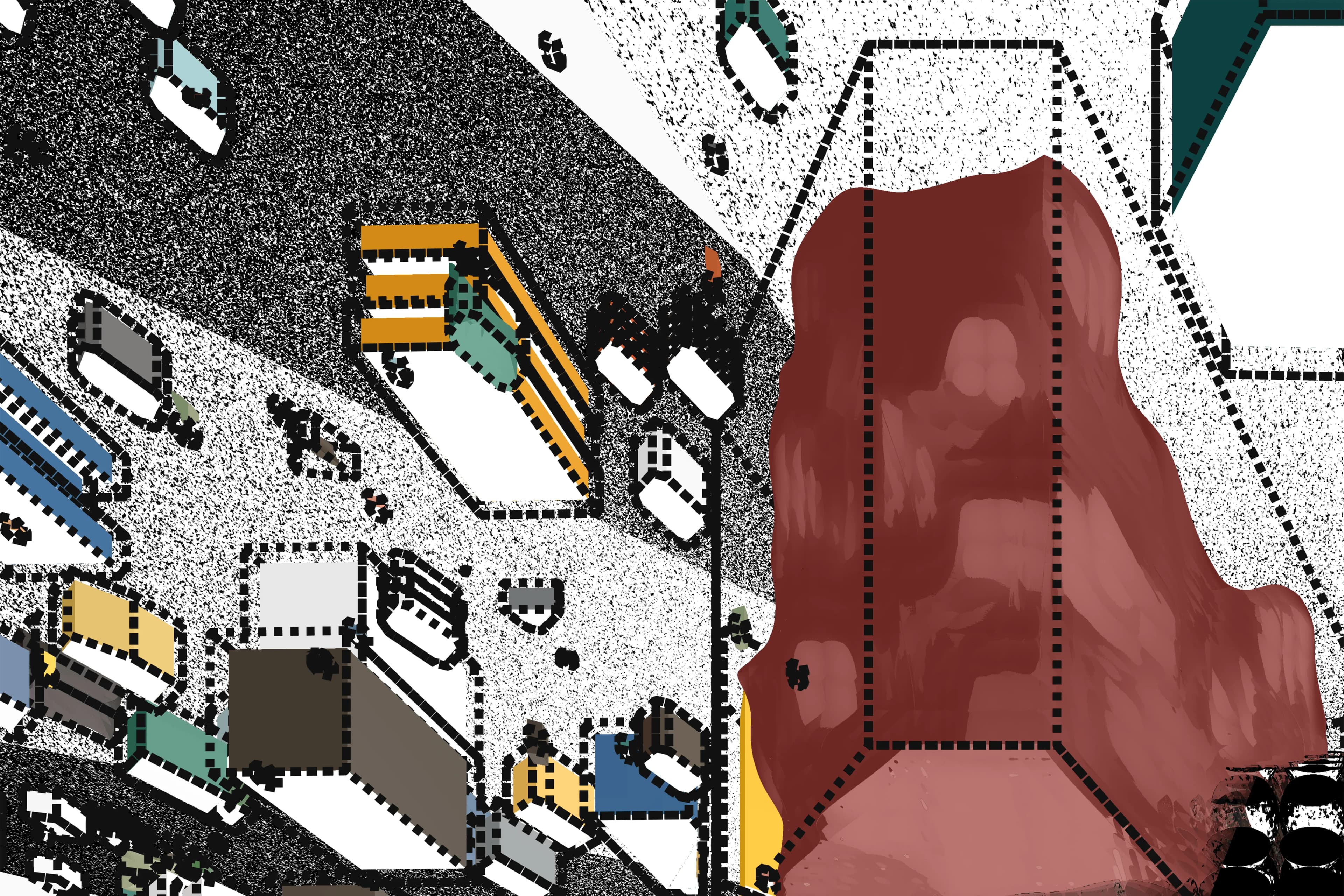
Visually, I was immediately drawn to the texture that arises in the transitions between blocks of color. I had no idea how the texture was achieved, and my immediate assumption was that it would be some strange homespun hack that required tons of code. I soon learned it was called a Kuwahara filter, with some tweaks applied. It was very easy to understand!
I've never used filters in my own work, and it was eye-opening to see how powerful they can be.
( 3 ) What was your creative process?
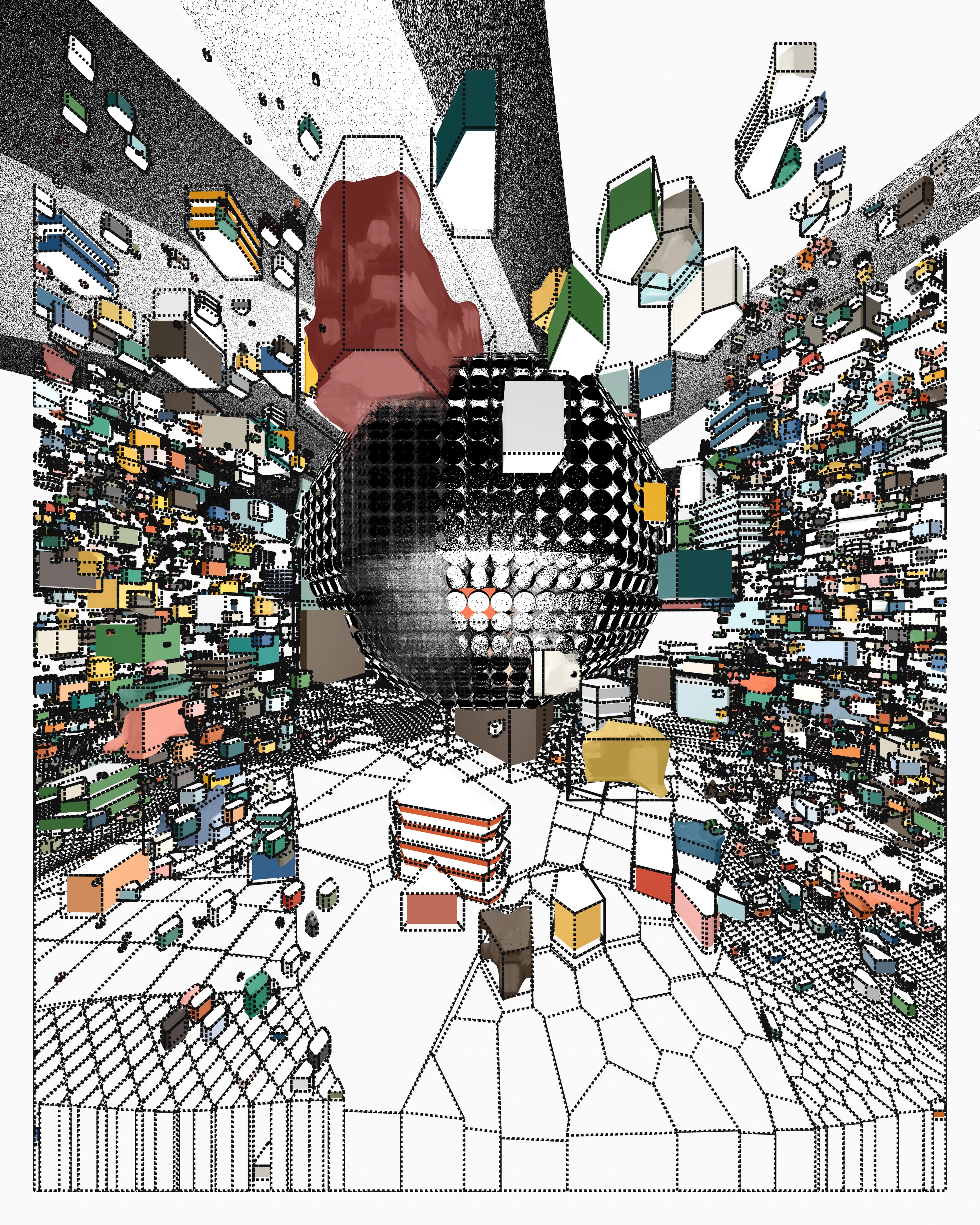
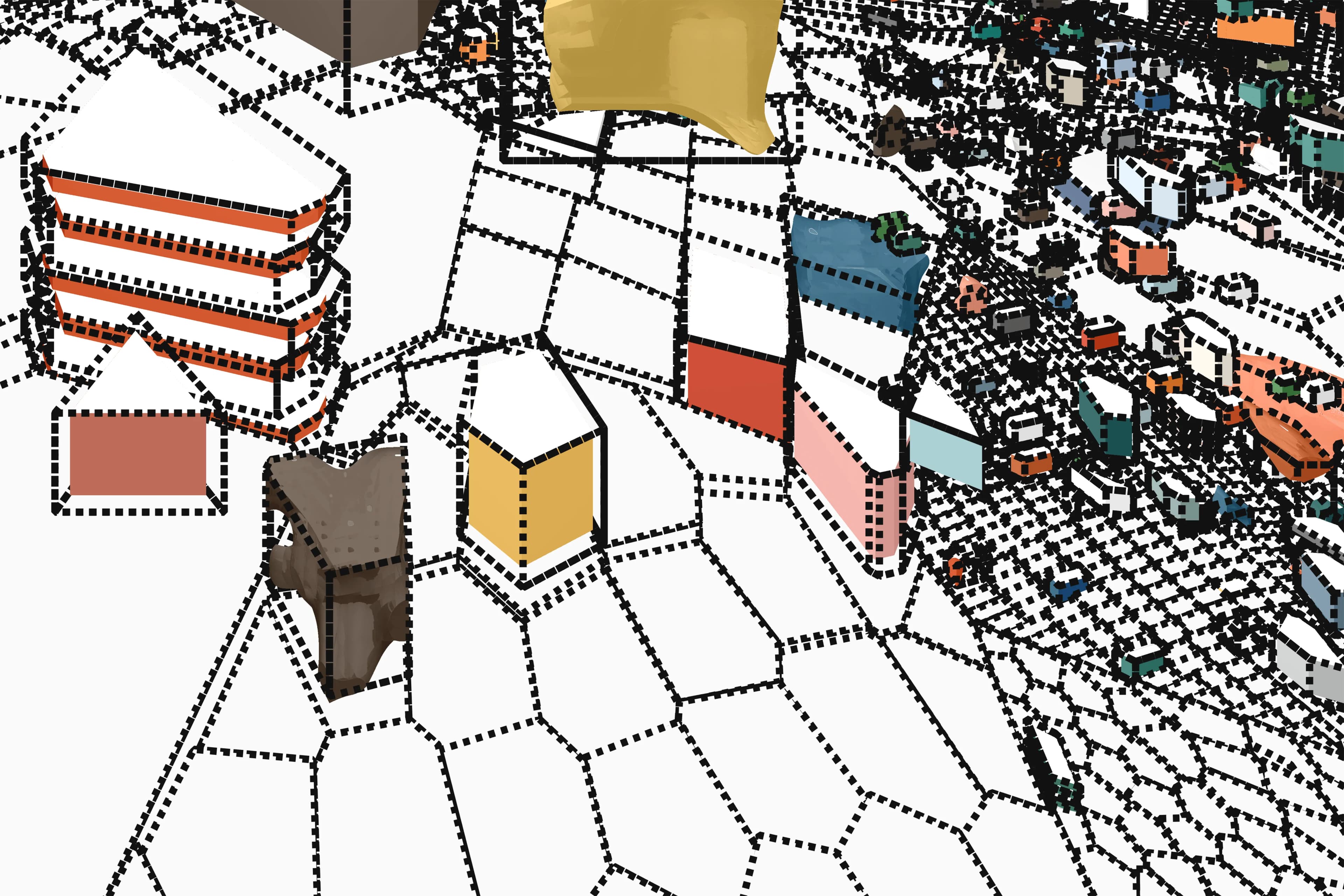
My goal from the beginning was to create something that was recognizably "me", while also incorporating elements from Junior's contribution. From Junior's contribution, there were a few visual elements that immediately stood out: the blocks of solid color, something I often make use of in my own work; the glitchy nature of the scene, both in the warping of the shapes and along the edges of different colors.
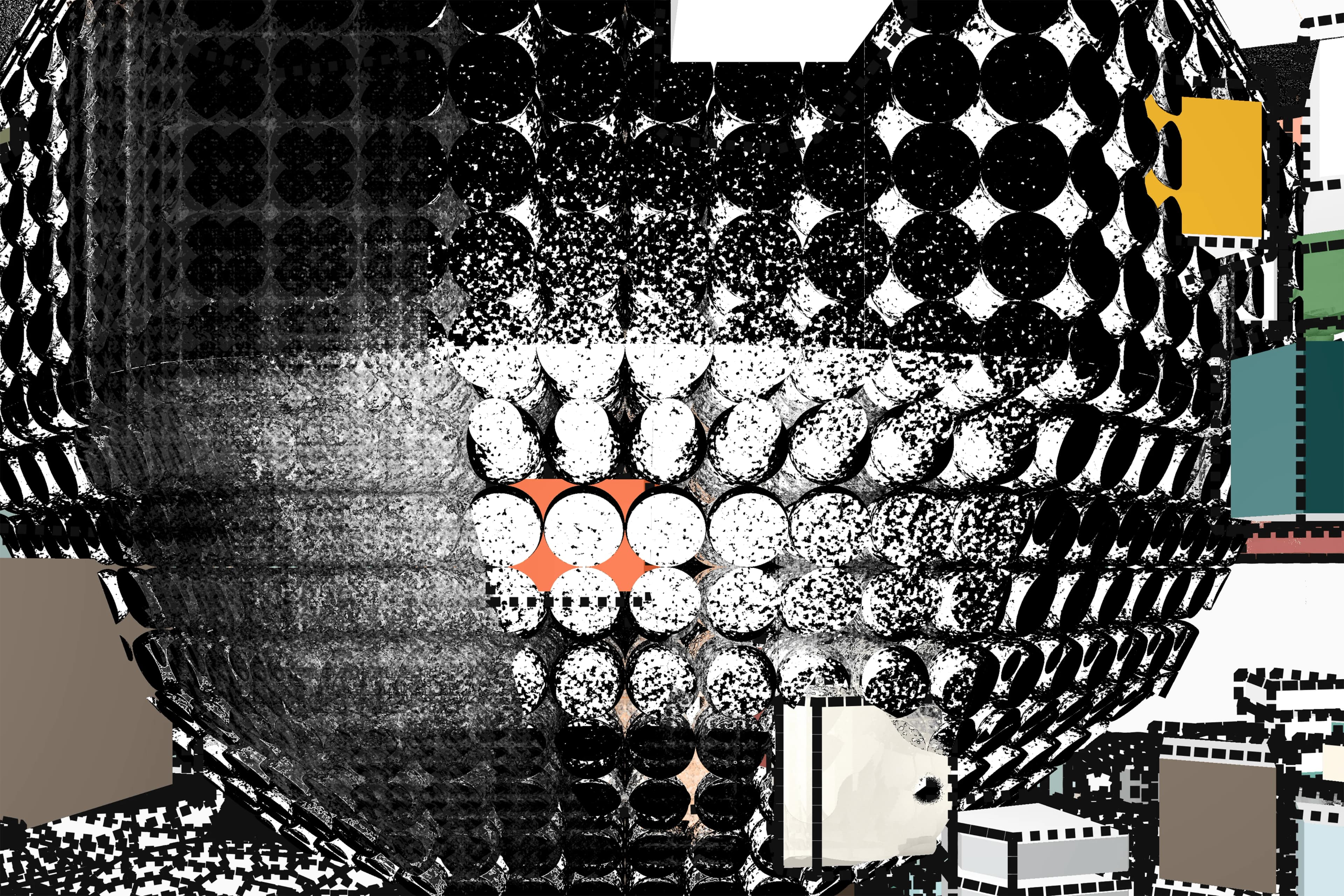
Around the time my work with the code started, I was experimenting with combining techniques from some of my earlier projects (repeated subdivision to form blocks (Factura) and ray marching (Gumbo)). This felt like a great starting point, one that would allow me to achieve my goal.
The final look was the product of an accident. Originally, all of the blocks were placed much lower in the scene, like a landscape. By accident, I applied a large amount of noise to the colored blocks, leaving the white ones as the ground below. I liked this accident so much that I decided to keep it.
( 4 ) What did you change and why?
The Kuwahara filter was modified slightly. While Junior's applies a brown color along hard edges, mine does not. I also used different parameters. Instead of having a glitchy nature, the filter will produce soft patches of color, leading to cloud-like blobs.
( 5 ) What did you keep and why?
I decided to keep the palette as is (only adjusting the background color slightly). The inclusion of a margin also worked nicely in my contribution. However, I do allow some parts of the scene to bleed outside it (check out the glitchy sky).
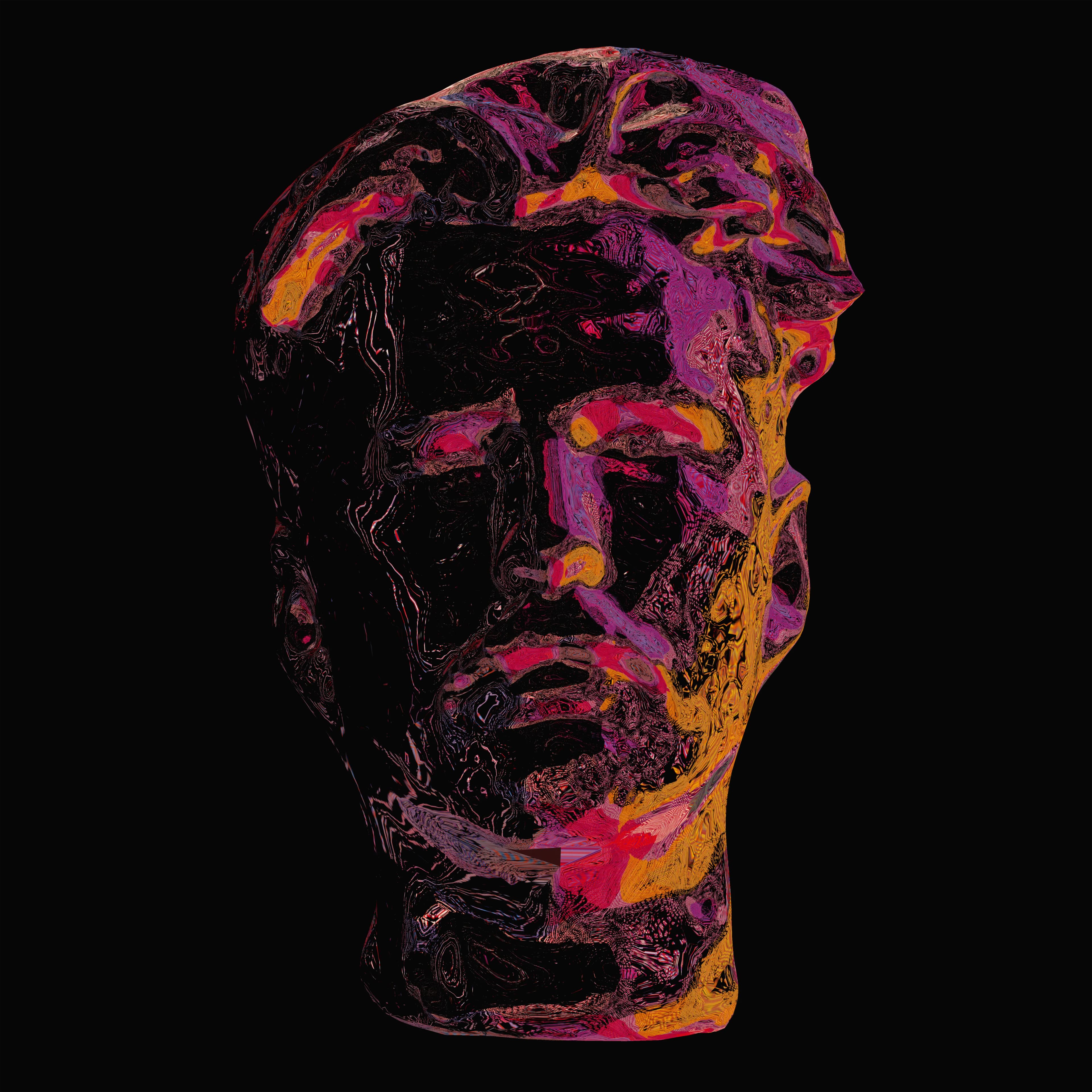
Mathias Isaksen is a generative artist and creative coder from Oslo, Norway. He embraces a do-it-yourself ethos and challenges established norms in his artistic practice. Isaksen’s work revolves around the delicate balance of opposing qualities and explores unconventional applications of common techniques and methods.
After earning a master’s degree in applied physics and mathematics from the Norwegian University of Science and Technology in 2020, Isaksen briefly worked in tech consulting before taking a sabbatical to fully dedicate himself to his creative pursuits. He has since released generative projects across multiple platforms, including gm.studio, Art Blocks and fx(hash).